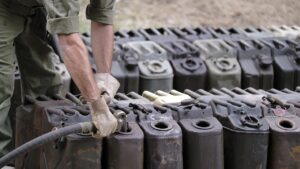
CMIT biocide in industrial preservation and risk control
Key Takeaways
- Understand the main symptoms and warning signs.
- Review common risks and prevention options.
- Learn when to seek professional medical advice.
What CMIT biocide means in practice
CMIT biocide usually refers to 5-chloro-2-methylisothiazol-3-one used together with MIT, or 2-methylisothiazol-3-one. In commercial and regulatory language, the blend is often written as CMIT/MIT, MCI/MI or C(M)IT/MIT, commonly as a 3:1 CMIT-to-MIT mixture with CAS number 55965-84-9. It is valued because very low active concentrations can inhibit bacteria, yeasts and fungi in water-based materials. It is also closely regulated because it is a recognized skin sensitizer and may present environmental risks if wastewater, process fluids or treated articles are not properly controlled.
For readers comparing biocide options, the key question is not simply whether CMIT/MIT works. It can be highly effective as an industrial preservative, but selection should be based on product type, local authorization, use concentration, labeling, worker exposure controls and compatibility with the final formulation.

Chemistry and naming are more important than they look
The phrase “CMIT biocide” is convenient, but it can hide important differences. CMIT is the chlorinated isothiazolinone component. MIT is the non-chlorinated methylisothiazolinone component. Many industrial products use the two together because the blend provides broad antimicrobial performance at low use levels. The most widely referenced regulatory identity is the reaction mass of 5-chloro-2-methyl-2H-isothiazol-3-one and 2-methyl-2H-isothiazol-3-one in a 3:1 ratio.
This distinction matters in compliance reviews. A safety data sheet may list individual components, a mixture CAS number, a product-family name or a trade name. These are not automatically interchangeable. A 1.5% active aqueous preservative, a 14% active industrial concentrate and a formulated paint containing trace preservative require different handling assumptions. The label and safety data sheet should therefore be checked for active content, stabilizers, pH range, hazard classification, approved applications and any downstream restrictions.
| Term | Meaning in industrial use | Why it matters |
|---|---|---|
| CMIT | Chlorinated methylisothiazolinone component | Often the more potent part of the blend and a key driver of sensitization concern |
| MIT | Methylisothiazolinone component | Used alone or with CMIT, but subject to its own regulatory limits |
| CMIT/MIT 3:1 | Common commercial and regulatory blend | Many approvals and restrictions refer to this fixed ratio |
| CAS 55965-84-9 | Mixture identifier for CMIT/MIT | Useful for SDS review, inventory checks and regulatory screening |
Where CMIT/MIT is used
CMIT/MIT is mainly an industrial preservation tool. Its job is to prevent microbial contamination during storage or use, not to sterilize a finished environment in a broad consumer sense. Water-based systems are especially vulnerable because they contain moisture, organic nutrients and repeated opportunities for contamination from raw materials, equipment, air and handling.
Common application areas include water-based paints and coatings, polymer emulsions, adhesives, sealants, detergents, household and institutional cleaning products, pigment dispersions, mineral slurries, metalworking fluids, cooling-water systems and some paper or process-water applications. In these settings, microbial growth can cause odor, viscosity loss, gas formation, pH drift, discoloration, corrosion, biofilm formation or product failure before the end of shelf life.
The European Union’s biocidal products framework illustrates the range of industrial uses. Commission Implementing Regulation (EU) 2016/131 approved C(M)IT/MIT (3:1) as an existing active substance for product-types 2, 4, 6, 11, 12 and 13, covering areas such as disinfectants, food and feed area disinfectants, in-can preservatives, liquid-cooling and processing systems, slimicides and metalworking-fluid preservatives. That EU approval started on July 1, 2017 and is listed with an expiry date of June 30, 2027, subject to the conditions in the regulation and any product-level authorization.
How CMIT biocide controls microbes
Isothiazolinones work through a multi-target chemical mechanism rather than a single narrow biological pathway. Published toxicology and microbiology literature links CMIT/MIT activity to reactions with thiol groups in microbial proteins and enzymes. This can disrupt respiration, metabolism and membrane-associated processes, leading to rapid growth inhibition and, when exposure is sufficient, irreversible cell damage.
For formulators, that mechanism has two practical consequences. First, CMIT/MIT can be effective at low concentrations when the formulation is compatible and the microbial challenge is realistic. Second, the same reactivity that supports antimicrobial performance can also reduce active stability in difficult matrices. Strong reducing agents, sulfides, amines, high microbial load, incompatible raw materials, elevated temperature or unsuitable pH can reduce preservative effectiveness. Laboratory challenge testing remains essential; a use rate copied from another formulation is not a substitute for data from the actual product.
Resistance is another reason to avoid casual under-dosing. Isothiazolinones have long been treated as broad, multi-target preservatives, but recent microbiology research has reported reduced susceptibility mechanisms in some bacteria under preservative pressure. This does not mean CMIT/MIT has stopped working as an industrial biocide. It does mean preservative design should combine correct concentration, clean manufacturing, water-quality control, packaging hygiene and periodic microbial monitoring.
Regulatory points that affect buying and formulation decisions
CMIT/MIT is regulated differently depending on the jurisdiction and end use. In the EU, active-substance approval is only the first step. A biocidal product containing that active substance must also be authorized for the relevant formulation, use pattern and user category before it is placed on the market. The European Commission also states that authorization can be granted only after evaluation shows that the product is effective and can be used safely for human health, animal health and the environment.
For C(M)IT/MIT (3:1), the EU approval conditions include attention to worker exposure, product efficacy and environmental risk. For some product types, the regulation calls for safe operational procedures, organizational measures and personal protective equipment where exposure cannot otherwise be reduced. Certain uses also include specific restrictions or risk-mitigation requirements, such as limits related to pulp and paper processing fluids, cooling systems, offshore installations, metalworking fluids and treated article labeling.
In the United States, CMIT/MIT falls within the EPA’s antimicrobial pesticide oversight when used as a preservative pesticide. EPA registration-review materials identify MIT/CMIT as Case 3092 with docket EPA-HQ-OPP-2013-0605. In a July 20, 2020 update, EPA described isothiazolinones as chemicals commonly used as material preservatives in countertops, food packaging, paint and household cleaning products, and noted that draft human-health and ecological risk assessments for several isothiazolinones had been posted for public comment. Buyers should therefore check the current EPA label, registration status and allowed use pattern for the specific product, not only the chemical name.
Cosmetics and consumer products require extra caution
CMIT/MIT has a long history as a preservative in rinse-off personal-care and cleaning products, but this is also where allergy concerns are most visible to consumers. The EU cosmetics framework has restricted the methylchloroisothiazolinone and methylisothiazolinone mixture to rinse-off cosmetics at a maximum concentration of 0.0015% of the 3:1 mixture. EU cosmetic rules also treat the mixture and MIT used alone as separate preservative entries with conditions that should not be casually combined. See also: Flocculants.
This cosmetic limit should not be copied into industrial preservation decisions. A shampoo, a decorative paint, a cooling-water treatment and a metalworking-fluid concentrate have different exposure routes, rinse-off behavior, worker-contact patterns and regulatory systems. However, the cosmetic restrictions are a useful reminder that sensitization risk is real even when the active ingredient is present at low ppm levels. Downstream formulators should consider who will handle the product, whether repeated skin contact is likely, whether the product is marketed to the general public, and whether local labeling rules require allergen or treated-article statements.
Safety, handling and environmental controls
The most important hazard-management issue for CMIT/MIT is skin sensitization. Once a person becomes sensitized to an isothiazolinone, very small future exposures may trigger allergic contact dermatitis. Concentrated preservatives can also be corrosive or irritating depending on the product composition, and CMIT/MIT is associated with aquatic toxicity concerns. These hazards do not prevent responsible industrial use, but they make closed handling, measured dosing and worker training important.
- Use only the authorized grade and application listed on the product label or technical documentation.
- Confirm the active concentration of the supplied preservative before calculating addition rates.
- Use closed transfer, automated or semi-automated loading where required or practical.
- Provide gloves, eye protection and protective clothing suitable for the actual concentrate and exposure route.
- Avoid aerosol formation, splashing and manual decanting from high-strength concentrates.
- Segregate incompatible chemicals, especially strong reducing agents and reactive nucleophiles.
- Validate preservation by challenge testing and repeat testing after major raw-material or process changes.
- Control wastewater and cleaning residues according to local discharge and hazardous-waste requirements.
Environmental controls should be designed around the use site. A small in-can preservative dose in a sealed coating is not the same as continuous dosing into process water with discharge potential. EU conditions for C(M)IT/MIT specifically refer to environmental risk in several process applications, including certain cooling, paper, offshore and slimicide uses. This supports a conservative approach: map where the active substance enters the process, where it may leave, and whether treatment, dilution, containment or substitution is needed.
How to decide whether CMIT/MIT is the right preservative
CMIT/MIT is often chosen when a water-based formulation needs strong broad-spectrum preservation at low dose and the product matrix is compatible. It may be less attractive when the product has high skin-contact potential, difficult labeling implications, incompatible chemistry, high pH instability, open manual handling, sensitive wastewater constraints or markets where alternative preservatives have clearer authorization.
A practical selection review should compare efficacy, regulatory fit and risk controls rather than focusing only on price per kilogram. BIT, MIT alone, OIT, DBNPA, bronopol, glutaraldehyde and other antimicrobial systems may be considered in some industrial contexts, but each has its own spectrum, stability profile, hazard classification and legal status. Substitution is not automatically safer or more effective; it simply moves the formulation into a different risk-and-performance balance.
| Decision point | Question to ask before use |
|---|---|
| Regulatory fit | Is the exact product authorized or registered for this product type, market and user group? |
| Formulation fit | Does the preservative remain active in the final pH, temperature and raw-material matrix? |
| Exposure profile | Will workers or end users have repeated skin contact with the treated product? |
| Microbial challenge | Has the formulation passed a challenge test against likely bacteria, yeast and fungi? |
| Waste pathway | Can residues, wash water and process discharge be managed within local requirements? |
The strongest preservative programs combine chemistry with process hygiene. Clean tanks, controlled process water, preserved raw materials, good housekeeping and appropriate packaging can reduce the preservative burden. In many plants, failures blamed on the biocide are actually caused by contaminated water loops, dirty transfer hoses, dead zones in tanks or unvalidated raw-material changes.
Frequently asked questions
Is CMIT the same as MIT?
No. CMIT and MIT are different isothiazolinone molecules. In many industrial preservatives they are used together as CMIT/MIT, commonly in a 3:1 ratio. The blend has its own mixture identity and regulatory conditions, so the two names should not be treated as interchangeable on labels or safety documents.
Is CMIT/MIT allowed in every industrial product?
No. Permission depends on the country, product type, concentration, user category and specific authorized or registered product. EU rules require both active-substance approval and product authorization. In the United States, EPA labeling and registration determine allowed preservative uses for pesticide-regulated applications.
Why is CMIT/MIT effective at low concentrations?
CMIT/MIT reacts with critical thiol-containing microbial components and can disrupt several essential metabolic processes. Because it is not limited to a single target, it can deliver broad preservation performance in compatible water-based systems. Efficacy still has to be confirmed by challenge testing in the actual formulation.
What is the main safety concern with CMIT biocide?
Skin sensitization is the central concern, especially with repeated or uncontrolled contact. Concentrates may also have irritation, corrosivity or aquatic-toxicity hazards depending on composition. Proper dosing equipment, personal protection, training, labeling and waste controls are therefore part of responsible use.
Can cosmetic limits be used as industrial dosage guidance?
No. Cosmetic limits are designed for cosmetic exposure scenarios and legal frameworks. Industrial coatings, detergents, process fluids and metalworking fluids require their own regulatory review, compatibility testing and microbial challenge data. Cosmetic restrictions are useful for understanding sensitization concern, not for setting industrial use rates.