How Does Polyacrylamide Flocculant Water Treatment Improve Oily Wastewater Purification Efficiency
Key Takeaways
- Understand the main symptoms and warning signs.
- Review common risks and prevention options.
- Learn when to seek professional medical advice.
Synthesis of Cationic Polyacrylamide With Diol-Branched Structure for Enhanced Oily Wastewater Flocculation
Polyacrylamide flocculants have become essential in industrial water treatment, particularly for oily wastewater. The synthesis of cationic polyacrylamide (PAM) with diol-branched structures enhances both flocculation efficiency and environmental compatibility. This structural modification improves charge distribution, hydrophilicity, and adsorption performance, leading to faster oil–water separation and reduced chemical oxygen demand (COD). In practice, such polymers outperform conventional flocculants due to their superior bridging ability and stability under varying conditions. The following sections detail the mechanisms, structural factors, operational parameters, and comparative advantages that define this advanced class of polymeric agents.
Overview of Polyacrylamide Flocculants in Water Treatment
Flocculation is a physicochemical process central to modern wastewater purification. It relies on polymeric agents like PAM to aggregate dispersed particles into larger flocs that can be easily separated from water.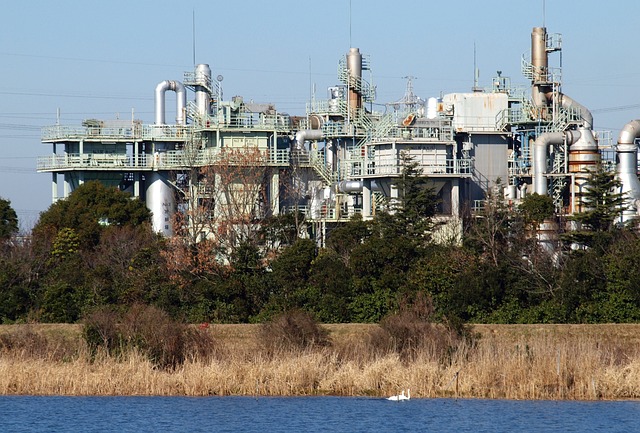
Fundamental Principles of Flocculation Mechanisms
Flocculation involves aggregation of suspended particles through charge neutralization and bridging effects. In water treatment systems, PAM functions as a high-molecular-weight polymer that promotes particle collision and sedimentation. Its performance depends on molecular weight, charge density, and chain architecture. A higher molecular weight enhances bridging between particles, while appropriate charge density ensures effective electrostatic attraction to oppositely charged colloids. The balance among these parameters determines the overall floc size distribution and settling rate.
Role of Polyacrylamide in Oily Wastewater Purification
In oily wastewater treatment, PAM facilitates oil–water separation by promoting coalescence of oil droplets into larger aggregates. This action reduces emulsion stability and accelerates phase separation. The polymer’s long chains adsorb onto droplet surfaces, forming bridges that link multiple droplets together. As a result, emulsified oils and fine particulates are efficiently removed from the effluent. Effective flocculation not only reduces COD but also lowers turbidity levels, improving the clarity of treated water suitable for reuse or discharge.
Structural Design of Cationic Polyacrylamide for Enhanced Performance
The structure of cationic PAM plays a decisive role in its interaction with contaminants. Tailoring functional groups and branching patterns provides a route to enhance its efficiency under complex wastewater conditions.
Influence of Cationic Functional Groups on Flocculation Efficiency
Cationic functional groups interact electrostatically with negatively charged oil droplets and colloids present in wastewater. Increasing the cationic charge density strengthens adsorption forces and destabilizes emulsions more effectively. However, excessive charge may lead to restabilization or overdosing effects. Optimized cationic composition ensures uniform floc formation with balanced size distribution and improved settling behavior. This adjustment allows better adaptability across different pH ranges commonly encountered in industrial effluents.
Advantages of Diol-Branched Structures in Polyacrylamide Chains
Introducing diol branches into PAM chains increases molecular flexibility and hydrophilicity. These branches enhance polymer–particle contact efficiency by exposing more active sites during flocculation. Additionally, branched configurations improve solubility in aqueous media, allowing rapid dispersion upon mixing with wastewater streams. Faster dissolution translates into shorter reaction times and more consistent treatment outcomes—an advantage especially relevant for high-throughput industrial operations where process stability matters.
Mechanistic Insights into Oily Wastewater Treatment Using Branched PAM Flocculants
The interaction between branched PAM molecules and oil droplets determines how effectively emulsions break down during treatment.
Interaction Between Polymer Chains and Oil Droplets
Adsorption occurs through hydrogen bonding, van der Waals forces, and electrostatic attraction between polymer chains and droplet surfaces. The diol branches serve as multiple binding sites that enhance these interactions simultaneously across several droplets. This multi-point attachment leads to stronger bridges between particles or droplets, forming large aggregates that settle rapidly under gravity or mild centrifugation.
Effects on Emulsion Stability and Demulsification Behavior
PAM disrupts interfacial films surrounding oil droplets that stabilize emulsions in wastewater systems. As these films weaken, interfacial tension decreases, allowing smaller droplets to merge into larger ones—a process known as coalescence. Consequently, demulsification occurs faster with reduced energy input compared to traditional chemical treatments. The outcome is clearer effluent water with significantly lower residual oil concentrations.
Optimization Parameters Affecting Flocculation Efficiency
Operational parameters play an equally crucial role as chemical design when applying polyacrylamide flocculants in real-world systems.
Impact of Dosage, pH, and Ionic Strength on Performance
An optimal dosage ensures sufficient polymer–particle interactions without causing overdosing phenomena such as restabilization or excessive sludge formation. pH influences the ionization degree of both the polymer’s functional groups and surface charges on suspended solids; thus it affects adsorption capacity directly. Similarly, ionic strength modifies electrostatic screening effects—high salt content can compress the double layer around particles, changing aggregation dynamics significantly.
Influence of Temperature and Mixing Conditions on Floc Formation
Temperature affects diffusion rates within the solution; moderate heating typically accelerates molecular motion but may alter polymer conformation if too high. Mixing intensity must be carefully controlled: gentle agitation distributes polymers evenly while preventing premature breakage of formed flocs. Shear stability becomes critical here—large dense aggregates must withstand mechanical stress during pumping or sedimentation stages without disintegration.
Comparative Evaluation with Conventional Flocculants in Oily Wastewater Systems
Comparing cationic diol-branched PAM with other types highlights why this formulation stands out for oily wastewater management.
Performance Comparison with Anionic and Nonionic Polymers
Cationic PAM exhibits superior removal efficiency because its positive charges attract negatively charged oily contaminants effectively. In contrast, nonionic polymers rely mostly on weak hydrogen bonding or van der Waals interactions that limit their performance under similar conditions. Some studies indicate mixed polymer systems—combining cationic with anionic species—can yield synergistic results depending on specific wastewater compositions.
Environmental Compatibility and Post-Treatment Considerations
From an environmental standpoint, evaluating biodegradability and residual toxicity remains essential before full-scale application. Post-treatment sludge characteristics influence dewatering efficiency; compact sludge reduces disposal costs considerably. Advanced formulations now focus on achieving high removal rates while minimizing ecological footprint through careful structural optimization rather than relying solely on dosage increases or additional coagulants.
Future Perspectives in Polyacrylamide-Based Oily Wastewater Treatment Technologies
The field continues evolving toward smarter materials capable of responding dynamically to changing environmental conditions.
Emerging Trends in Polymer Modification Strategies
Recent research explores incorporating responsive functional groups that adapt their conformation or charge state depending on pH or temperature variations within wastewater streams. Another promising direction involves nanocomposite or hybrid PAM materials combining inorganic nanoparticles with organic backbones to improve mechanical strength and selectivity toward specific pollutants like hydrocarbons or surfactants commonly found in refinery effluents.
Integration with Advanced Separation Processes
Integrating PAM-based flocculation with advanced separation technologies such as membrane filtration or dissolved air flotation offers higher purification efficiency at lower operational energy costs. Hybrid systems allow sequential removal where large aggregates formed by flocculation are first separated mechanically before finer polishing steps occur through membranes—achieving near-complete contaminant removal suitable for reuse applications in closed-loop industrial circuits.
FAQ
Q1: What makes diol-branched cationic polyacrylamide more effective than linear variants?
A: The diol branches increase flexibility and provide multiple active sites for binding oil droplets, resulting in stronger bridging interactions and faster sedimentation rates.
Q2: How does pH affect polyacrylamide performance in oily wastewater?
A: pH alters the ionization state of both the polymer’s functional groups and suspended particles’ surface charges, influencing adsorption capacity directly.
Q3: Can cationic polyacrylamides replace all traditional coagulants?
A: Not entirely; they complement inorganic coagulants but cannot fully substitute them where extremely fine colloids require dual mechanisms for complete removal.
Q4: Are branched PAM flocculants environmentally safe?
A: Modern formulations are designed for low toxicity and partial biodegradability; however, post-treatment monitoring remains necessary to confirm compliance with discharge standards.
Q5: What future improvements are expected for polyacrylamide-based treatments?
A: Developments will likely focus on stimuli-responsive polymers capable of self-adjusting their activity based on changes in temperature or ionic strength within treatment systems.