
Can Polyacrylamide Uses Enhance Solar-Powered Hydrogel Efficiency in Desert Air

Key Takeaways
- Understand the main symptoms and warning signs.
- Review common risks and prevention options.
- Learn when to seek professional medical advice.
Solar-Powered Hydrogel Can Create Free Clean Drinking Water from Even Desert Air
Solar-powered hydrogels based on polyacrylamide are emerging as a transformative material for atmospheric water harvesting. Their ability to capture and release moisture using solar energy makes them particularly suited for arid environments where traditional water sources are scarce. By tuning the polymer structure, integrating photothermal agents, and improving thermal management, these systems can produce clean drinking water directly from desert air with minimal external energy input.
Chemical Structure and Functional Properties of Polyacrylamide
Polyacrylamide (PAM) is a synthetic polymer widely used in environmental and industrial applications due to its strong hydrophilic nature. In solar-powered hydrogels, its molecular design determines how effectively it absorbs and retains water under fluctuating thermal conditions.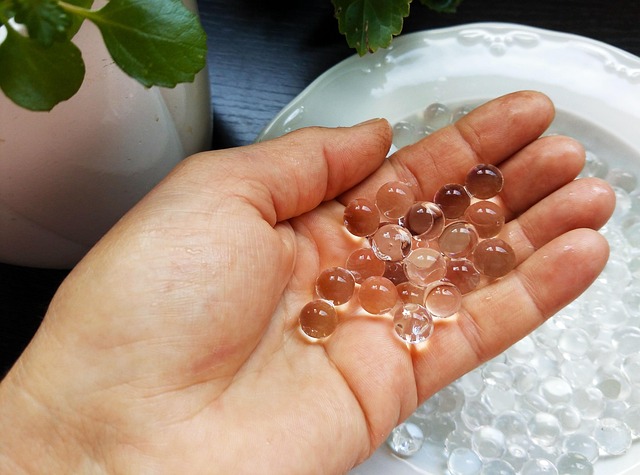
Overview of Polyacrylamide’s Molecular Composition and Its Hydrophilic Nature
Polyacrylamide consists of repeating acrylamide units containing amide functional groups that form hydrogen bonds with water molecules. This structure provides high affinity for moisture, which is essential for passive water collection in low-humidity air. The polymer’s polar backbone enhances its capacity to interact with atmospheric vapor, making it a preferred base material in hydrogel synthesis.
Influence of Cross-Linking Density on Water Absorption and Retention
The cross-linking density within the polyacrylamide network controls both swelling behavior and mechanical stability. A lower cross-linking ratio increases pore volume and improves water uptake but reduces structural integrity. Conversely, higher cross-linking enhances durability while limiting absorption capacity. Balancing these parameters allows hydrogels to maintain efficient performance during repeated hydration–dehydration cycles driven by solar heating.
Thermal Stability and Its Relevance to Solar-Driven Systems
Thermal stability ensures that the polymer matrix does not degrade under continuous solar exposure. Polyacrylamide exhibits relatively high resistance to thermal decomposition up to around 200 °C, enabling consistent operation in desert climates where surface temperatures fluctuate sharply between day and night.
Mechanisms of Water Absorption and Release in Polyacrylamide-Based Hydrogels
In solar-driven systems, the physical chemistry of moisture capture defines how efficiently the hydrogel converts ambient humidity into liquid water. The interplay between molecular interactions and temperature response governs this process.
Capillary Action and Hydrogen Bonding as Key Mechanisms for Moisture Capture
Water molecules are drawn into the hydrogel through capillary condensation within micro- and mesoporous structures. Simultaneously, hydrogen bonding between amide groups and absorbed molecules stabilizes the captured moisture. This dual mechanism allows PAM-based gels to function effectively even when relative humidity drops below 30%, typical of desert air.
Temperature-Dependent Desorption Processes Under Solar Irradiation
When exposed to sunlight, embedded photothermal materials convert light into heat, raising the local temperature inside the gel. As temperature increases, hydrogen bonds weaken, releasing stored water vapor which can then condense into liquid form upon cooling surfaces. This reversible process enables repeated daily cycles without external power input.
Impact of Polymer Chain Flexibility on Water Vapor Diffusion Rates
Flexible polymer chains facilitate faster diffusion pathways for both absorption and desorption phases. Excess rigidity can trap moisture within internal regions, reducing effective yield per cycle. Therefore, maintaining moderate chain mobility through controlled polymerization is key to achieving optimal vapor exchange rates.
Integration of Polyacrylamide into Solar-Powered Hydrogel Systems
Integrating polyacrylamide into functional solar-harvesting structures requires precise control over microstructure and energy transfer mechanisms to achieve both efficiency and durability under harsh conditions.
Structural Design Considerations for Desert Air Applications
For arid-zone operation, pore size distribution must be optimized to capture scarce atmospheric moisture efficiently. Smaller pores enhance capillary condensation at low humidity levels while larger pores aid vapor transport during release phases. Structural reinforcement using fibrous scaffolds or hybrid matrices prevents deformation under cyclic stress.
Incorporation of Photothermal Materials to Enhance Solar Energy Utilization
Adding photothermal agents such as carbon black or graphene transforms absorbed sunlight into localized heat that triggers rapid desorption. These additives improve system responsiveness by concentrating heat where it is most needed—at the polymer–water interface—thereby reducing energy losses across the bulk material.
Balancing Mechanical Integrity with Water Uptake Efficiency
Mechanical robustness ensures long-term operation without cracking or delamination under repeated expansion–contraction cycles. Composite designs often combine elastic polymers or inorganic fillers with PAM networks to sustain flexibility while maintaining high sorption capacity.
Interactions Between Polyacrylamide and Photothermal Agents
The synergy between polyacrylamide matrices and nanostructured photothermal materials defines overall system performance in terms of light absorption efficiency, heat distribution, and operational lifespan.
Synergistic Effects Between Polyacrylamide Matrices and Nanoparticles (e.g., Carbon Black, Graphene)
Nanoparticles dispersed within PAM networks act as localized heat sources during irradiation. Their high optical absorption coefficients allow rapid temperature rise upon sunlight exposure, accelerating evaporation kinetics without compromising structural uniformity.
Influence on Light Absorption, Heat Localization, and Evaporation Kinetics
Effective dispersion ensures uniform light-to-heat conversion across the gel surface. Uneven distribution may cause localized overheating or poor desorption uniformity. Controlled mixing techniques such as ultrasonication or in situ synthesis help maintain consistent performance across large-scale samples.
Evaluation of Long-Term Stability Under Cyclic Heating and Cooling Conditions
Repeated heating–cooling cycles can induce fatigue within both polymer chains and nanoparticle interfaces. Stability tests typically involve hundreds of simulated day–night cycles under varying humidity levels to assess potential degradation pathways such as oxidation or chain scission that could limit operational life.
Enhancing Efficiency Through Material Modification and Composite Design
To further boost hygroscopic performance, researchers explore molecular-level modifications that tailor polarity, charge distribution, or thermal conductivity within PAM-based systems.
Copolymerization Strategies to Improve Hygroscopic Performance
Introducing ionic monomers like acrylic acid or zwitterionic species increases electrostatic interaction with water molecules, enhancing sorption at low humidity levels. However, excessive ionic content can reduce elasticity or lead to salt accumulation after repeated use—a trade-off requiring careful formulation control.
Tailoring Polymer Polarity to Optimize Performance Across Varying Humidity Levels
Adjusting monomer ratios changes overall polarity balance within the hydrogel network. Higher polarity favors adsorption at low RH values but may hinder desorption speed; moderate polarity often yields better equilibrium between uptake efficiency and regeneration rate under real-world conditions.
Trade-Offs Between Enhanced Sorption Capacity and Mechanical Robustness
Increasing hydrophilicity generally boosts absorption but weakens mechanical strength due to excessive swelling pressure. Reinforcing agents such as silica nanoparticles or cellulose fibers are often introduced to counteract this effect without sacrificing performance metrics.
Incorporating Nanostructured Additives for Improved Thermal Conductivity
Efficient heat transfer is vital for quick regeneration cycles in solar-powered systems operating under variable sunlight intensity.
Role of Metal Oxides, Carbon Nanotubes, or MXenes in Facilitating Heat Transfer
Metal oxide nanoparticles like TiO₂ or Al₂O₃ improve thermal conductivity by forming continuous conduction pathways through the hydrogel matrix. Similarly, carbon nanotubes (CNTs) offer superior anisotropic conductivity that accelerates internal temperature equilibration during solar exposure.
Effects on Overall Hydrogel Responsiveness During Solar Activation Cycles
Enhanced thermal transport shortens response time between heating onset and vapor release initiation. This results in higher daily yield per unit area compared with unmodified PAM gels operating under identical radiation fluxes.
Assessment of Additive Dispersion Uniformity Within the Polymer Network
Uniform dispersion prevents hotspots that could damage polymer chains over time. Advanced mixing methods such as freeze-drying-assisted blending or solvent exchange help maintain homogeneous additive distribution throughout large-scale samples used in field prototypes.
Environmental and Operational Factors Affecting System Performance
Real-world deployment demands resilience against environmental stressors typical of desert climates including dust accumulation, extreme diurnal shifts, and prolonged UV exposure.
Influence of Desert Climate Conditions on Water Harvesting Efficiency
Relative humidity variations significantly affect daily yield; efficiency may drop sharply when RH falls below 10%. High daytime temperatures accelerate desorption but also increase evaporative losses if condensation surfaces are not adequately insulated from ambient air.
Adaptation Strategies for Maintaining Stable Performance Under Fluctuating Conditions
Surface coatings resistant to fouling by dust particles preserve optical transparency over time while encapsulation layers reduce oxidative degradation from UV radiation—both critical for multi-year field operation without maintenance interruptions.
Importance of Surface Coatings or Encapsulation Techniques for Durability
Protective films made from fluorinated polymers or silica shells extend device lifetime by shielding sensitive components from sand abrasion common in open-air installations across desert regions such as North Africa or western Australia.
Energy Balance and Sustainability Considerations
Energy efficiency determines whether solar-powered hydrogels can compete economically with established atmospheric water generators using refrigeration-based condensation systems.
Quantitative Analysis of Solar-to-Water Conversion Efficiency
Experimental prototypes have demonstrated conversion efficiencies approaching 0.3 L m⁻² h⁻¹ under direct sunlight averaging 1 kW m⁻² irradiance—figures comparable with early metal-organic framework (MOF) harvesters yet achieved using cheaper raw materials like PAM derivatives.
Comparison With Other Water Harvesting Materials Such as MOFs or Silica Gels
While MOFs exhibit higher adsorption selectivity per gram due to crystalline porosity, their cost remains prohibitive for large-scale deployment compared with polyacrylamide-based composites which rely on readily available precursors widely used across multiple polyacrylamide uses including agriculture flocculants and wastewater treatment aids.
Life-Cycle Assessment Focusing on Recyclability and Environmental Impact of Polyacrylamide Composites
Life-cycle assessments indicate relatively low embodied energy since production involves aqueous-phase polymerization at moderate temperatures; recyclability remains limited but potential recovery via rehydration–drying cycles offers partial material reuse without significant loss in performance metrics over tens of cycles tested so far.
Future Research Directions in Polyacrylamide-Based Solar Hydrogels
Recent advances point toward smarter materials capable of adaptive response tuned automatically by environmental cues rather than fixed operational settings designed beforehand in laboratories.
Advancements in Smart Responsive Polymers for Adaptive Water Capture
Emerging research explores thermoresponsive copolymers incorporating N-isopropylacrylamide segments whose phase transition near ambient temperature enables self-regulated capture–release behavior synchronized with daily temperature oscillations typical of desert climates; photoresponsive variants triggered directly by light intensity are also gaining traction among experimental prototypes aimed at autonomous field operation platforms integrated with low-power sensors monitoring local humidity trends continuously throughout day-night cycles.
Scaling Challenges and Practical Implementation Pathways
Scaling production beyond laboratory batches requires addressing challenges related to uniform cross-linking across thick films exceeding several centimeters while maintaining consistent porosity gradients critical for efficient vapor diffusion; cost-performance optimization may rely on simplified synthesis routes leveraging existing industrial infrastructure already producing tons per year for established polyacrylamide uses thereby lowering entry barriers toward commercial rollout targeted at remote communities lacking centralized water supply infrastructure worldwide.
FAQ
Q1: How does a solar-powered hydrogel generate drinkable water?
A: It captures moisture from air through hydrogen bonding within its polymer matrix then releases it upon heating by sunlight where condensed vapor yields purified liquid suitable for consumption after basic filtration if necessary.
Q2: Why is polyacrylamide preferred over other polymers?
A: Its strong hydrophilicity combined with tunable mechanical strength makes it ideal for repeated hydration-desiccation cycles required in atmospheric harvesting applications operating continuously outdoors.
Q3: Can these hydrogels function effectively at night?
A: They primarily absorb moisture overnight when relative humidity rises then release collected water during daytime heating thus completing one full operational cycle every 24 hours naturally synchronized with diurnal variations.
Q4: Are there environmental concerns related to polyacrylamide use?
A: While stable under normal conditions unreacted monomer residues must be minimized since acrylamide itself is toxic hence modern formulations employ near-complete conversion ensuring safety standards aligned with international environmental regulations such as ISO 14001 frameworks governing sustainable chemical manufacturing practices globally recognized across industry sectors today.
Q5: What future improvements are expected?
A: Ongoing work focuses on integrating flexible electronics enabling autonomous monitoring plus new composite architectures combining higher thermal conductivity additives improving energy utilization rates leading eventually toward scalable off-grid solutions capable of delivering potable water directly from ambient air even under extreme aridity scenarios once considered technically impractical decades ago.