Wastewater aeration explained for treatment performance and energy control
Key Takeaways
- Understand the main symptoms and warning signs.
- Review common risks and prevention options.
- Learn when to seek professional medical advice.
Why wastewater aeration matters
Wastewater aeration is the controlled introduction of air or oxygen into wastewater so aerobic microorganisms can break down biodegradable organic matter. In activated sludge systems, aeration also keeps biomass mixed with incoming waste. Without that mixing, treatment can become uneven, concentrated near the water surface, inlet, or the most active aeration zones. For many municipal and industrial plants, the practical question is not whether aeration is needed. It is how much air to supply, where to deliver it, and how to avoid both oxygen shortage and unnecessary energy use.
The U.S. Environmental Protection Agency describes aeration as serving two basic purposes: supplying oxygen to metabolizing microorganisms and providing mixing so organisms contact dissolved and suspended organics. That definition is simple, but its operating impact is broad. Aeration affects effluent quality, nitrification, solids settling, odor control, and power cost at the same time. More articles in the Wastewater section cover related treatment and compliance topics.
What aeration does in biological wastewater treatment
In aerobic biological treatment, bacteria use oxygen while converting organic pollutants into new biomass, carbon dioxide, water, and other end products. If dissolved oxygen falls too low, biological oxidation can slow, odors may develop, and ammonia removal can become unreliable where nitrification is required. If aeration is excessive, a plant may spend more on electricity than necessary and may also see operational side effects, including poor floc structure or weaker settling performance.
Aeration is most closely associated with activated sludge, oxidation ditches, sequencing batch reactors, membrane bioreactors, and aerated lagoons. In each configuration, the aeration equipment must fit the wastewater strength, basin geometry, solids concentration, temperature, hydraulic variation, and treatment objective. A food-processing stream with high biochemical oxygen demand, for example, can require a different oxygen delivery strategy from a municipal plant treating relatively steady domestic wastewater. Industrial wastewater can also contain surfactants, oils, solvents, salts, metals, or pH shocks that change oxygen transfer or inhibit the biology.
Because aeration supports a living treatment system, operators usually review several indicators together. Dissolved oxygen readings show whether oxygen is present at the probe location, but they do not prove that the entire basin is well mixed or that the microorganisms are healthy. Mixed liquor suspended solids, sludge volume index, ammonia, nitrate, alkalinity, pH, oxidation-reduction potential, blower pressure, airflow, and effluent BOD or COD trends all help complete the operating picture.
Main wastewater aeration system types
The EPA’s September 1999 fine bubble aeration fact sheet groups common aeration approaches into subsurface systems and mechanical systems. Subsurface systems introduce air through submerged devices, while mechanical systems agitate the liquid surface or bulk liquid to entrain oxygen. In practice, equipment selection is more specific because each option has different strengths, maintenance needs, and process limits.
| System type | How it works | Typical strengths | Key limitations |
|---|---|---|---|
| Fine bubble diffused aeration | Blowers push air through membrane, ceramic, disc, tube, dome, or plate diffusers that create small bubbles. | High oxygen transfer potential; well suited to many activated sludge systems and energy upgrades. | Diffusers can foul; air distribution must be balanced; maintenance may require basin access or cleaning. |
| Coarse bubble diffused aeration | Air exits through larger openings, producing larger bubbles and stronger mixing patterns. | Useful where mixing, clog resistance, or ruggedness is more important than maximum oxygen transfer. | Usually lower oxygen transfer efficiency than fine bubble systems. |
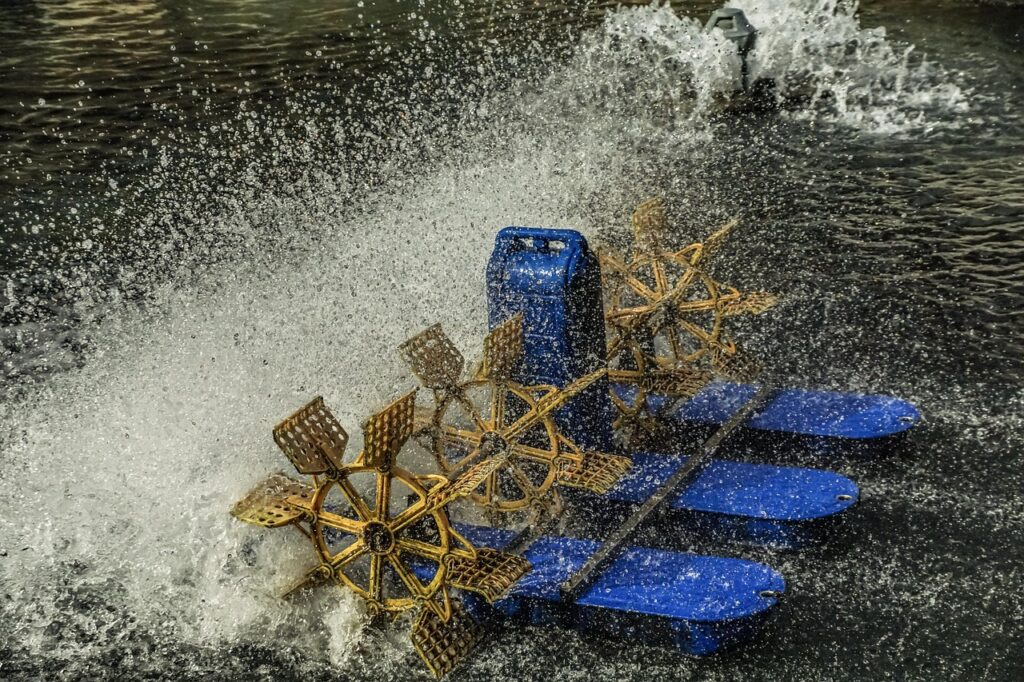
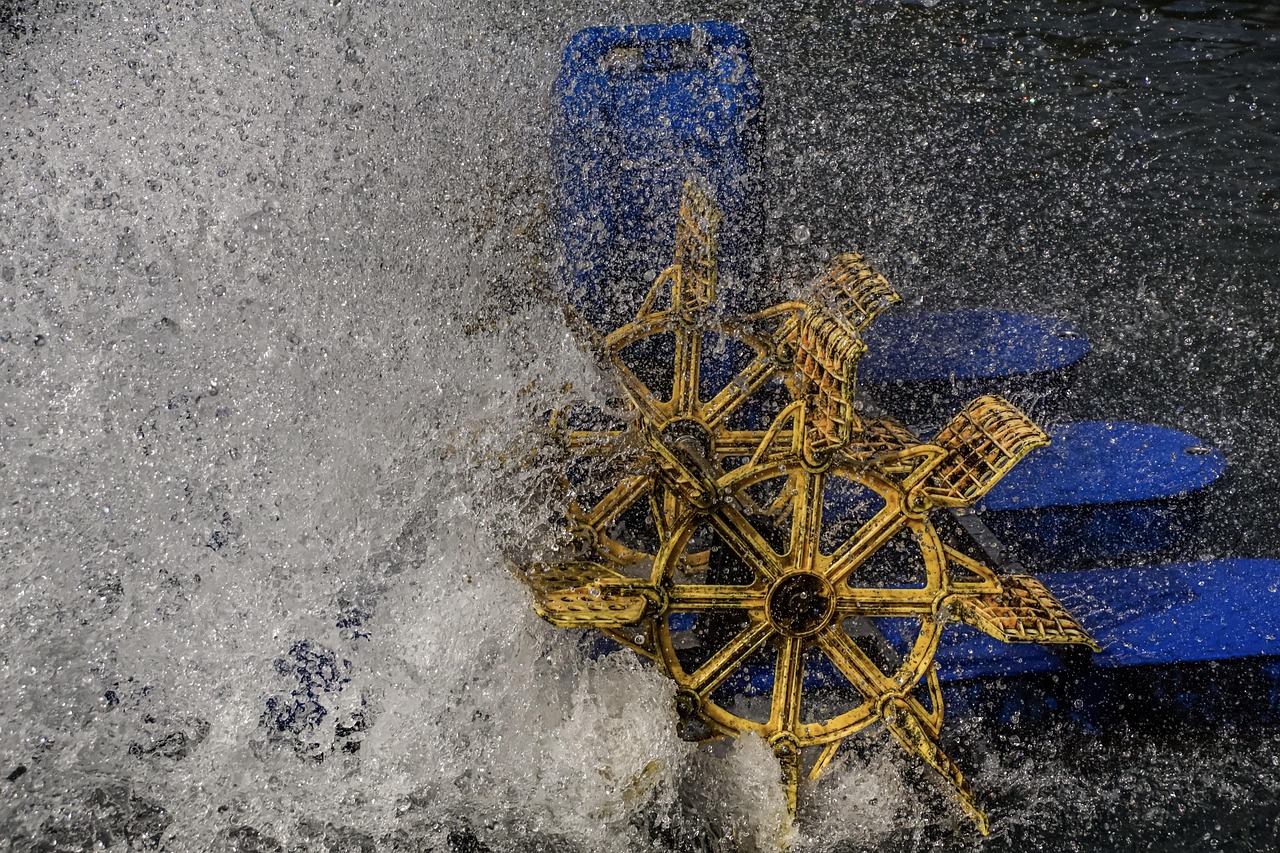
| Mechanical surface aeration | Rotors, brushes, turbines, or impellers agitate the water and expose it to air. | Can combine mixing and oxygen transfer; equipment is visible and often accessible. | May be less efficient for deep basins; can create aerosol, noise, or surface maintenance concerns. |
| Jet or aspirating aeration | Pumped liquid and air are mixed through nozzles or venturi-style devices. | Can provide strong directional mixing and may suit certain retrofit or industrial applications. | Performance depends on pump energy, nozzle condition, and basin hydraulics. |
No single aeration type is automatically right for every plant. Fine bubble systems often receive attention because small bubbles provide more surface area per unit air volume and stay in contact with the liquid longer. That advantage can shrink, however, when diffusers foul, basin coverage is poor, mixed liquor solids are high, surfactants are present, maintenance is irregular, or the blower cannot operate efficiently across the required air range.
Oxygen transfer is not the same as useful treatment
Oxygen transfer efficiency describes how effectively oxygen moves from air into water. Useful treatment depends on whether that oxygen reaches the active biomass under actual process conditions. Clean water tests can overstate field performance because wastewater contains solids, surfactants, salts, and biological films. Engineers commonly adjust oxygen transfer calculations for process water conditions, temperature, elevation, tank depth, diffuser submergence, and the expected dissolved oxygen setpoint.
The EPA fine bubble fact sheet includes older but still useful case observations that show both the opportunity and the caution. At the Renton Wastewater Treatment Plant in Washington, a study reported that perforated membrane fine bubble diffusers required 30 to 40 percent less air than coarse bubble diffusers to maintain comparable mixed liquor dissolved oxygen, and total energy consumption fell after installation. At the Ridgewood Wastewater Treatment Plant in New Jersey, a retrofit from coarse bubble diffusion to fine pore aeration reportedly reduced power consumption by about 28 percent and improved nitrification-related effluent quality. These examples should not be read as guaranteed retrofit results. They show why site-specific testing and design review matter.
The same EPA document also warns that fine pore diffusers can be susceptible to chemical attack and that airflow distribution is critical at low airflow rates. This is especially relevant in chemical and industrial wastewater, where wastewater composition can change quickly. A diffuser material that performs well in domestic wastewater may not tolerate certain solvents, oils, acids, oxidants, or cleaning chemicals. Material compatibility should be checked before treating fine bubble aeration as a simple equipment swap.
Energy control and dissolved oxygen strategy
Aeration is often one of the largest electricity loads in a wastewater treatment plant. A U.S. Department of Energy wastewater tipsheet published in December 2021 states that aeration typically accounts for about one-half of a facility’s energy use and identifies over-aeration as a common reason for unnecessary blower demand. An EPA research project page updated in 2023 reported that municipal wastewater treatment plants consume between 0.8 percent and 3 percent of all electricity in the United States, with blowers used in aeration processes consuming substantial amounts of electricity.
Energy control starts with matching air supply to oxygen demand. That demand changes by time of day, season, influent load, temperature, nitrification requirement, and return sludge conditions. Running blowers at a fixed high output may protect permit compliance in the short term, but it can also hide process problems and increase energy cost. Cutting airflow without understanding ammonia load, basin hydraulics, or solids inventory can create the opposite problem: unstable treatment.
Common control improvements include:
- Calibrated dissolved oxygen probes placed where readings represent meaningful process zones.
- Airflow meters for individual basins, zones, or diffuser grids rather than relying only on blower status.
- Variable frequency drives or adjustable blowers that can follow demand without operating inefficiently.
- Control logic that prevents rapid cycling and protects minimum mixing needs.
- Routine review of DO, ammonia, nitrate, pH, alkalinity, and effluent quality together.
Many plants use dissolved oxygen setpoints as a practical control method. More advanced facilities may use ammonia-based aeration control or feed-forward logic, but those approaches require dependable instrumentation, operator confidence, and safeguards. The right target is not the lowest possible DO reading. It is the lowest stable oxygen supply that supports the required biological reactions and settling performance.
Regulatory performance and process limits
Aeration equipment does not by itself define compliance. In the United States, publicly owned treatment works are subject to secondary treatment standards expressed in terms of five-day biochemical oxygen demand, suspended solids, and pH. EPA’s Secondary Treatment Standards page was last updated on August 31, 2026, and points to these technology-based requirements. The federal regulation at 40 CFR 133.102 lists, among other items, 30-day average limits of 30 mg/L for BOD5 and suspended solids, 7-day average limits of 45 mg/L, a minimum 85 percent 30-day average removal requirement, and pH generally from 6.0 to 9.0 for covered secondary treatment.
Those figures are important context, but they should not be applied casually to every industrial facility. Industrial dischargers may operate under direct discharge permits, pretreatment requirements, local limits, or sector-specific effluent guidelines. Aeration can help remove biodegradable organics and support ammonia oxidation, but it is not a stand-alone solution for every pollutant. Metals, persistent organics, high oil and grease, toxic solvents, extreme pH, or high dissolved salts may require equalization, chemical treatment, separation, anaerobic pretreatment, advanced oxidation, membrane systems, or other controls before or after aerobic treatment. See also: Flocculants.
For that reason, wastewater aeration should be evaluated as part of the full treatment train. A plant may have adequate blower horsepower and still fail because influent equalization is poor, nutrients are deficient, pH is unstable, return activated sludge control is weak, or clarifier capacity is limiting. Conversely, a plant may appear oxygen-limited when the real issue is fouled diffusers, inaccurate probes, air leakage, or biological inhibition.
Operational problems to watch
Under-aeration
Under-aeration can appear as low dissolved oxygen, rising effluent BOD or ammonia, septic odors, dark mixed liquor, filamentous growth, or poor process recovery after load peaks. Before increasing blower output permanently, operators should check whether the problem is oxygen supply, diffuser distribution, probe location, influent shock loading, nutrient imbalance, or toxicity.
Over-aeration
Over-aeration wastes energy and may contribute to pin floc, dispersed solids, excessive nitrate formation in some processes, or settling changes. It can also give operators a false sense of security because high DO does not guarantee stable biomass, good floc, or adequate alkalinity for nitrification.
Diffuser fouling and uneven air distribution
Fine bubble diffusers can lose performance as biological growth, scale, grease, or chemical deposits restrict pores or membranes. Common signs include higher blower pressure, uneven bubble patterns, zones with poor DO response, and rising energy use for the same treatment result. Cleaning methods should match the diffuser material and wastewater chemistry; aggressive chemicals can damage some membranes or shorten diffuser life.
Industrial variability
Chemical wastewater often varies by batch, shift, cleaning cycle, or production campaign. Equalization can be as important as aeration hardware because biological systems respond better to gradual load changes. Where toxicity is possible, pilot testing or staged acclimation may be safer than assuming that more air will solve the problem.
A practical selection checklist
Before selecting or upgrading a wastewater aeration system, a facility should define the treatment objective and the operating envelope. The following checklist can support early screening before detailed engineering:
- What pollutants must be removed: BOD, COD, ammonia, odor compounds, or a combination?
- What are the average, peak, and seasonal oxygen demands?
- Is the primary limitation oxygen transfer, mixing, basin volume, clarifier capacity, or wastewater toxicity?
- Can the existing blowers operate efficiently at lower and higher airflow ranges?
- Are diffuser materials compatible with the wastewater and cleaning chemicals?
- Will maintenance require draining basins, lifting grids, or using in-place cleaning?
- Are DO probes, airflow meters, pressure readings, and laboratory data reliable enough for control decisions?
- How will the system respond to power interruptions, production shocks, cold weather, or wet-weather flow?
The most resilient approach is usually not the largest blower or the most efficient diffuser on paper. It is a balanced system that provides oxygen, mixing, control flexibility, maintainability, and process protection under real wastewater conditions.
Frequently asked questions
What is wastewater aeration in simple terms?
Wastewater aeration is the process of adding air or oxygen to wastewater so aerobic microorganisms can consume biodegradable pollutants. It also helps mix microorganisms with dissolved and suspended organic matter in the treatment basin.
Is fine bubble aeration always better than coarse bubble aeration?
No. Fine bubble aeration often offers higher oxygen transfer efficiency, but it can be more sensitive to fouling, chemical compatibility, and air distribution. Coarse bubble systems may be preferred where rugged mixing or clog resistance is more important than maximum oxygen transfer.
What dissolved oxygen level should an aeration basin use?
There is no universal setpoint. The correct range depends on treatment goals, basin design, solids concentration, nitrification needs, temperature, and permit requirements. Operators should use DO readings together with ammonia, nitrate, BOD or COD, pH, alkalinity, settling, and blower data.
Why does aeration use so much energy?
Blowers or mechanical aerators must move large volumes of air or water continuously to support biological treatment. Energy use rises when diffusers foul, air is poorly distributed, blowers are oversized, controls are fixed, or plants over-aerate to compensate for uncertainty.
Can aeration treat all industrial wastewater pollutants?
No. Aeration is effective mainly for biodegradable pollutants and aerobic biological reactions. Many industrial pollutants, including some metals, toxic organics, oils, solvents, and high-salt streams, may require pretreatment or additional treatment steps.