How Does Nonionic Polyacrylamide Influence the Synergistic Mechanism of CTAB on Kaolinite Filter Cake
Key Takeaways
- Understand the main symptoms and warning signs.
- Review common risks and prevention options.
- Learn when to seek professional medical advice.
Synergistic Mechanism of CTAB and Nonionic Polyacrylamide on Pore Structure of Kaolinite Filter Cake
The cooperative adsorption of cetyltrimethylammonium bromide (CTAB) and nonionic polyacrylamide (NPAM) on kaolinite surfaces drives a distinct modification in pore structure, influencing both filtration efficiency and cake permeability. The synergy between the polymer’s hydrogen-bonding capacity and the surfactant’s hydrophobic alignment alters surface charge, promotes aggregation, and restructures pore networks. This interaction not only reduces water flow channels but also stabilizes the microstructure under pressure, providing a predictable pathway for industrial control of fine clay filtration.
Molecular Interactions Between Nonionic Polyacrylamide and CTAB
The molecular interplay between NPAM and CTAB determines how surface chemistry evolves at the kaolinite–solution interface. Understanding their structural roles clarifies why coadsorption enhances both flocculation and pore consolidation.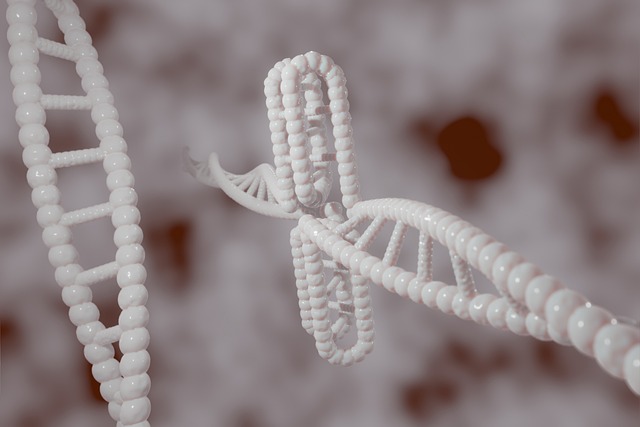
Structural Characteristics of Nonionic Polyacrylamide (NPAM)
Nonionic polyacrylamide features a linear chain configuration with pendant amide groups that readily form hydrogen bonds with surface hydroxyls on kaolinite. These amide linkages increase adsorption through polar interactions, leading to improved particle bridging. Unlike ionic variants, NPAM lacks charged groups, resulting in minimal electrostatic repulsion and greater compatibility with cationic surfactants such as CTAB. This neutrality allows NPAM to act as a flexible binder that adapts to varying ionic strengths without destabilizing colloidal systems.
Surface Activity and Micellization Behavior of CTAB
CTAB exhibits strong surface activity due to its quaternary ammonium headgroup and long hydrophobic tail. When introduced into mineral suspensions, its cationic head adsorbs onto negatively charged clay sites while hydrophobic tails orient outward, reducing surface tension. Above its critical micelle concentration, CTAB molecules aggregate into micelles that interact with clay minerals by encapsulating hydrophobic regions or forming bilayer structures. This reorientation modifies surface wettability from hydrophilic to more hydrophobic states, which profoundly affects particle interactions during filtration.
Synergistic Adsorption Mechanisms Between NPAM and CTAB
When NPAM and CTAB coexist in solution, their adsorption becomes cooperative rather than competitive. The polymer’s amide groups provide anchoring sites for surfactant headgroups through hydrogen bonding or van der Waals attraction. This coadsorption changes the local surface potential, often reducing negative charge density on kaolinite edges. The result is a decrease in electrostatic repulsion between particles and an increase in interfacial cohesion. Such synergy lowers interfacial energy barriers, promoting stable aggregation even under dynamic flow conditions.
Influence on Kaolinite Particle Aggregation and Dispersion
The joint presence of NPAM and CTAB significantly modifies how kaolinite particles aggregate or disperse in suspension. Their combined effect shifts electrokinetic properties and alters network formation during sediment consolidation.
Modification of Kaolinite Surface Charge Characteristics
After treatment with NPAM–CTAB mixtures, zeta potential measurements typically show a shift toward neutrality or slight positivity. This reduction in surface charge diminishes double-layer repulsion forces between particles, encouraging flocculation. The degree of aggregation correlates directly with adsorption density; higher coverage leads to faster coagulation kinetics as polymer-surfactant complexes bridge adjacent platelets more efficiently.
Structural Rearrangement Within Particle Networks
Microscopic observations reveal that polymer–surfactant bridges form cross-linked frameworks connecting multiple kaolinite layers. These bridges reduce interparticle spacing while increasing rigidity within the network. As the system consolidates under filtration pressure, secondary structures emerge—dense clusters that enhance cake strength yet limit fluid mobility through smaller pore channels.
Effects on Pore Structure Evolution in Kaolinite Filter Cake
Changes in molecular interactions translate into measurable variations in pore geometry within filter cakes. The synergistic additives modify both size distribution and connectivity patterns across the microstructure.
Alterations in Pore Size Distribution and Connectivity
Experimental analyses using scanning electron microscopy (SEM) or mercury intrusion porosimetry indicate that NPAM–CTAB addition narrows pore size distribution by filling larger voids with polymer chains while compressing smaller ones through enhanced aggregation forces. At moderate concentrations, this combination can either constrict or expand pore throats depending on surfactant coverage relative to polymer loadings. Quantitatively, porosity decreases proportionally to additive dosage until reaching an equilibrium where further addition yields negligible change.
Impact on Permeability and Water Retention Properties
The modified pore architecture directly influences permeability behavior during filtration tests. Reduced average pore diameter increases hydraulic resistance but simultaneously improves water retention within the cake matrix. Polymer entanglement across pores limits continuous flow channels, forcing water to pass through tortuous pathways that slow drainage rates. Under sustained pressure gradients, these structural modifications remain stable due to strong interparticle bonding formed by NPAM–CTAB complexes.
Thermodynamic and Kinetic Perspectives of the Synergistic Mechanism
A thermodynamic view reveals how adsorption equilibria govern molecular layering on mineral surfaces, while kinetic analysis explains how these layers evolve over time toward steady-state configurations.
Adsorption Isotherms Describing NPAM–CTAB Interaction on Kaolinite Surfaces
Adsorption data commonly fit Langmuir or dual-site models where monolayer coverage transitions into multilayer buildup at higher concentrations. Parameters derived from these models suggest cooperative binding—where presence of one species enhances affinity for the other—indicating positive interaction energy between polymer segments and surfactant molecules. Environmental factors such as temperature elevation or increased ionic strength alter equilibrium constants by influencing solvation dynamics around functional groups.
Kinetic Pathways Governing Coating Formation and Structural Stabilization
Time-resolved studies show that initial adsorption is diffusion-controlled as molecules migrate toward available sites on kaolinite surfaces. Once primary layers form, subsequent rearrangements proceed via reaction-controlled mechanisms involving conformational adjustment of polymer chains around surfactant assemblies. Molecular weight distribution plays a decisive role: higher-mass NPAM variants yield slower but more durable coatings due to reduced chain mobility during rearrangement phases.
Implications for Filtration Efficiency and Industrial Applications
The practical relevance of these findings extends beyond laboratory conditions into full-scale industrial dewatering systems where control over filter cake properties dictates process throughput.
Optimization Strategies for Filter Cake Formation Control
Adjusting NPAM-to-CTAB ratios provides an effective means to tune permeability outcomes: lower ratios favor denser cakes suitable for high-clarity filtrates, while higher ratios maintain moderate porosity for faster drainage cycles. Balancing flocculation intensity against filtration rate ensures operational efficiency without compromising product quality in mineral processing lines handling fine clays or tailings slurries.
Broader Relevance to Colloidal System Engineering
Insights gained from this mechanism apply broadly across colloidal engineering fields involving mineral–polymer–surfactant systems—from wastewater treatment where fine solids removal is critical to ceramic slurry formulation requiring controlled rheology. Similar molecular principles can guide predictive modeling for synergistic effects based on charge distribution, hydrophobicity balance, and macromolecular flexibility within composite dispersions.
FAQ
Q1: How does nonionic polyacrylamide differ from anionic or cationic forms?
A: Nonionic polyacrylamide lacks charged groups, making it less sensitive to electrolyte concentration changes while maintaining strong hydrogen-bonding capacity with mineral surfaces.
Q2: Why does CTAB improve flocculation when combined with NPAM?
A: CTAB neutralizes negative charges on kaolinite surfaces while aligning its hydrophobic tails outward; this facilitates cooperative binding with NPAM chains that bridge adjacent particles.
Q3: What happens if excessive CTAB is added?
A: Overdosage may cause micelle formation dominating surface coverage, leading to steric hindrance rather than bridging—reducing overall flocculation efficiency.
Q4: Which analytical methods confirm pore structure changes?
A: Techniques such as SEM imaging and mercury intrusion porosimetry quantify alterations in pore size distribution, connectivity, and overall porosity after additive treatment.
Q5: Can this mechanism apply beyond kaolinite systems?
A: Yes; similar synergistic behavior occurs in other layered silicates or oxide minerals where polymer-surfactant coadsorption governs dispersion stability and filtration performance.