Moringa oleifera seeds water purification and what the evidence really shows
Key Takeaways
- Understand the main symptoms and warning signs.
- Review common risks and prevention options.
- Learn when to seek professional medical advice.
What moringa seed treatment can and cannot do
Moringa oleifera seeds water purification is best understood as a clarification step, not as a complete drinking-water treatment. Crushed or extracted moringa seeds can release positively charged proteins that help destabilize negatively charged clay, silt, organic particles and some microorganisms. The resulting flocs can then settle or be removed by filtration.
Recent peer-reviewed reviews report substantial turbidity reduction under controlled jar-test conditions, especially when dose, mixing and settling are well managed. The same body of evidence also points to important limits. Moringa seed powder can add dissolved organic carbon, affect taste and odor, and create microbial regrowth concerns if treated water is stored or chlorinated without further controls. In practical water treatment, moringa fits in the coagulation and flocculation step, followed by sedimentation, filtration and verified disinfection.
Why moringa seeds attract attention in flocculation
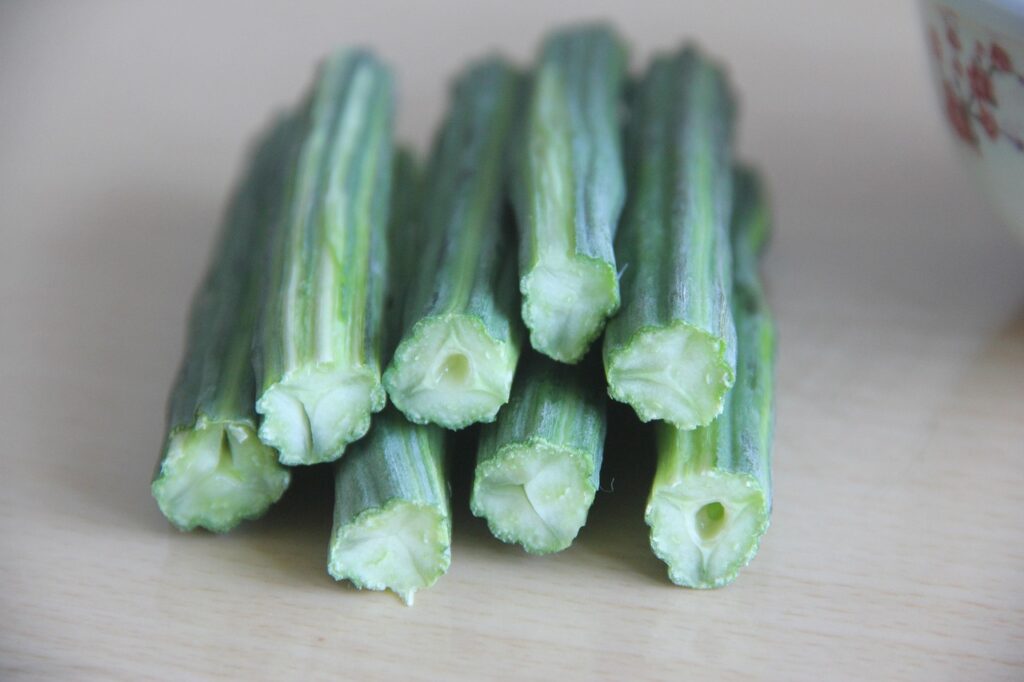
Moringa oleifera, often called the drumstick tree, grows in many tropical and subtropical regions. Its seeds have attracted interest in water treatment because they are locally available in some rural areas and contain water-soluble cationic proteins that can act as natural coagulants. That places the seed material in the broader category of flocculants, particularly where low-cost clarification is being studied for small systems, emergency response, or pre-treatment before filtration.
The attraction is practical. Conventional water plants often rely on aluminum salts, iron salts, lime adjustment, synthetic polymers and multi-stage filtration. These systems can be highly effective, but they also depend on chemical supply chains, trained operators, reliable dosing equipment and sludge handling. Moringa seed treatment can be prepared with basic crushing, extraction and settling steps. That does not make it automatically safer or more reliable, but it explains why it continues to appear in household-water and decentralized-treatment research.
The key distinction is that moringa is not mainly a disinfectant. It is a particle-removal aid. The U.S. CDC describes flocculation-disinfection products as systems in which a flocculant forms clumps that settle and a separate disinfectant kills germs. Moringa can help with the clumping part, but without a tested disinfection barrier, clarified water should not be assumed to be microbiologically safe.
How the seed proteins work in water
Raw surface water often contains fine suspended particles with negative surface charges. These particles repel each other and can remain suspended for long periods, which is why muddy water does not always clear quickly by gravity alone. Coagulation changes this condition by neutralizing charges, while flocculation builds larger aggregates that can settle or be filtered.
Moringa seeds contain several protein fractions associated with cationic activity. A July 13, 2026 systematic review in PLOS Water summarized the active components as Moringa oleifera cationic proteins, while noting that they are not one uniform chemical. Some frequently discussed proteins are water-soluble, strongly basic and small compared with many synthetic polymers. In treatment terms, they can bind to or bridge suspended particles, forming flocs through charge neutralization, patch attraction and bridging mechanisms.
In simplified process terms, moringa seed clarification follows four steps:
-
Preparation: Dry mature seeds are dehulled, crushed and either used as powder or extracted into water or salt solution.
-
Rapid mixing: The coagulant is dispersed through turbid water so active proteins contact suspended solids.
-
Gentle flocculation: Smaller destabilized particles collide and form larger flocs.
-
Settling and separation: Flocs settle as sludge and the clarified water is decanted or filtered.
This sequence matters. If moringa powder is simply sprinkled into water without enough mixing, or if settled sludge is disturbed during decanting, performance can be inconsistent. The treatment should be evaluated as a process, not as a single ingredient.
What recent evidence says about performance
The most useful recent finding is not that moringa sometimes works; that has been reported for decades. What matters for operators and researchers is how strongly the result depends on test design, coagulant preparation and source-water quality. The 2026 PLOS Water systematic review identified 50 non-duplicate publications, included 25 for data collection and synthesized 511 data points. It reported that studies using appropriate concentrations and a three-stage coagulation, flocculation and sedimentation model commonly achieved turbidity reductions in the 80–96% range. The same review also found frequent research-quality issues, including inadequate standardization and missing controls.
This helps avoid both overclaiming and dismissing moringa. The material can perform well in high-turbidity waters when the procedure is controlled. At the same time, a jar-test result from one water source cannot be copied directly to another. Seed age, cultivar, storage condition, oil content, extraction method, water pH, initial turbidity, alkalinity and mixing intensity can all change the optimum dose.
Published examples show why a universal recipe is risky. Some studies have reported strong turbidity reduction at low milligram-per-liter doses when using extracted or defatted material, while others required far higher doses with whole-seed powder. The PLOS review noted that correlations between initial turbidity, coagulant dose and turbidity reduction could not be established reliably across studies because preparation methods and active-protein concentrations varied so much.
| Question | Evidence-based answer |
|---|---|
| Can moringa reduce turbidity? | Yes. Many controlled studies show substantial turbidity reduction when dose and mixing are optimized. |
| Can it replace filtration? | No. Settling removes much of the floc, but filtration is normally needed to polish remaining particles. |
| Can it disinfect water by itself? | Not reliably. Microbial reduction may occur with floc removal, but a verified disinfection step is still needed. |
| Is whole-seed powder always best? | No. Whole powder is simple, but defatted or extracted coagulants may reduce residual organic load. |
Key process variables for jar testing and pilot work
For operators, researchers and water-treatment planners, the practical question is not whether moringa is natural. It is whether it can meet a defined treatment objective with repeatable control. WHO drinking-water treatment guidance describes jar testing as the normal way to select optimum coagulant dose and pH. The same principle applies to moringa.
Seed preparation
Whole-seed powder is the simplest form, but it also introduces more residual plant material. Removing the seed coat, pressing or extracting oil, and preparing an aqueous or saline extract can change performance. Defatting is especially important in research because seed lipids and other organics may interfere with clarification or contribute to taste, odor and downstream disinfection concerns.
Dose control
Underdosing leaves particles insufficiently destabilized. Overdosing can reverse particle charge, increase residual coagulant and sometimes raise final turbidity. The 2026 systematic review highlighted overdose as a serious issue because excess coagulant can remain suspended or restabilize colloid-coagulant complexes. In practice, moringa should be dosed by measured concentration, not by vague instructions such as a pinch or a spoonful. See also: Inhibitors.
Mixing and settling
Coagulation needs a short high-energy mixing step, followed by gentler flocculation and adequate settling time. Excessive agitation can shear fragile flocs; insufficient agitation can prevent contact between the coagulant and particles. After settling, the clarified layer still needs careful decanting or filtration so sludge is not carried forward.
Verification
Turbidity should be measured before and after treatment. For drinking-water contexts, microbial testing and residual organic assessment are also important. In the United States, EPA turbidity rules for conventional or direct filtration systems require finished water never to exceed 1 NTU and require at least 95% of monthly samples to be at or below 0.3 NTU. Household or field moringa treatment should not be presented as meeting those benchmarks unless it has actually been tested against them.
Limitations that matter for safe use
The main limitation of moringa seed treatment is residual organic matter. A 2022 study on moringa-derived coagulants reported strong turbidity removal in high-turbidity clay suspensions, but also found that the extraction process allowed a large share of extracted dissolved organic carbon into treated water. That trade-off is central: the same natural material that supplies active proteins can also add biodegradable organic content.
Residual organics matter for three reasons. First, they can affect taste, odor and appearance. Second, they can support microbial regrowth during storage. Third, if chlorination is used later, added organic matter can increase concern over disinfection by-products. This does not mean moringa and chlorine can never be used in the same treatment train. It does mean sequence, dose, filtration and organic-carbon control should be evaluated instead of assumed safe.
Another limitation is chemical contamination. Coagulation can remove particulates and some contaminants attached to particles, but it is generally not a reliable solution for dissolved chemicals, salinity, pesticides, industrial solvents, nitrate, fluoride, arsenic or radioactive contaminants unless specific testing proves removal. CDC household-water guidance makes a similar point for boiling, disinfection and flocculation products: if water contains harmful chemical or radioactive material, these steps alone may not make it drinkable.
Moringa performance can also be weaker in low-turbidity waters. When there are fewer suspended particles, seed residues may represent a larger share of the remaining cloudiness. This is one reason defatted extracts are often studied for lower-turbidity water, while raw powder is more commonly discussed for visibly muddy water.
How moringa compares with alum and synthetic polymers
Aluminum sulfate and ferric salts remain widely used because they are standardized, predictable and supported by decades of plant-scale operating practice. Synthetic polymer flocculants can be highly efficient at low doses, especially when paired with inorganic coagulants. Moringa has a different value proposition: local sourcing, biodegradability and potential suitability for decentralized pre-treatment, but with less standardization and more variability.
The 2026 systematic review reported that appropriate dosing ranges for alum and moringa seed coagulants were broadly comparable in the studies it assessed, but alum generally remains easier to specify and control in regulated systems. Moringa may be attractive where local availability, low equipment intensity and sustainability are important, yet it should be treated as an experimental or site-specific coagulant unless its preparation, dose and treated-water quality are validated.
For the chemical industry, the more realistic opportunity is not to market moringa as a miracle replacement. It is to study how natural protein coagulants can be standardized, defatted, extracted, blended or paired with filtration and disinfection. That is where natural coagulants may contribute to lower-sludge or lower-metal treatment strategies without giving up verification.
Practical takeaway for water-treatment decisions
Moringa oleifera seeds can help purify water in the limited sense of reducing turbidity through coagulation and flocculation. They should not be described as a complete purification method unless the full process also controls microorganisms, residual organics and relevant chemical contaminants. The safest framing is as a natural coagulant or flocculation aid for turbid water, followed by sedimentation, filtration and disinfection.
For laboratory work, run side-by-side jar tests against alum or another benchmark coagulant. Include untreated controls, measure initial and final turbidity, report dose in mg/L, disclose seed source and storage age, and test microbial indicators where drinking-water use is discussed. For household or community use, avoid any claim of potability without validated treatment performance. Clarity is useful, but safe water depends on barriers that address particles, pathogens and chemicals together.
Frequently asked questions
Do moringa seeds really clean muddy water?
Yes. Moringa seed powder or extract can clarify muddy water by forming flocs that settle out. The result depends on the dose, water quality, seed preparation, mixing and settling time.
Is moringa-treated water safe to drink?
Not automatically. Clarification reduces suspended solids, and it may reduce some microorganisms attached to particles, but filtration and disinfection are still needed for a defensible drinking-water process.
Why can too much moringa make water worse?
Overdosing can leave excess organic seed material in suspension, restabilize particles or increase dissolved organic carbon. That can raise turbidity, affect taste and complicate later chlorination.
Is defatted moringa seed better than whole-seed powder?
Often, but not always. Defatting can reduce oil and some residual organics, which may improve performance in low-turbidity water. Whole-seed powder is simpler but less controlled.
Can moringa replace alum in municipal plants?
For regulated municipal treatment, moringa is not a simple drop-in replacement. Alum and ferric salts are standardized and easier to dose. Moringa needs site-specific testing, quality control and downstream treatment verification.