Plant based natural coagulants for water and wastewater treatment
Key Takeaways
- Understand the main symptoms and warning signs.
- Review common risks and prevention options.
- Learn when to seek professional medical advice.
Plant based natural coagulants are materials derived from seeds, leaves, peels, bark, mucilage, and other plant fractions that help suspended particles form flocs that can be settled, floated, or filtered out. They are being studied and, in some cases, used as alternatives or aids to alum, ferric salts, synthetic polymers, and other conventional treatment chemicals. Their appeal is not that they are automatically safer or more effective. It is that they may reduce reliance on mineral salts, make use of renewable biomass, and perform well in selected water and wastewater streams. Their limitation is just as important: plant materials vary, can add dissolved organic matter, and need to be tested across the full treatment train rather than judged by turbidity removal alone.
For readers tracking the wider flocculants market, plant-derived coagulants are best viewed as one technical option within coagulation, flocculation, sedimentation, filtration, and disinfection systems. They are not a universal substitute for engineered treatment chemistry.
What plant based natural coagulants are
In water and wastewater treatment, coagulation is the destabilization of fine particles, colloids, color bodies, algae cells, and some natural organic matter so they can come together. Flocculation is the gentle mixing stage that allows those destabilized particles to grow into larger aggregates. Depending on its chemistry, a plant-based coagulant may act mainly as a coagulant, mainly as a flocculant, or as a combined coagulant-flocculant.
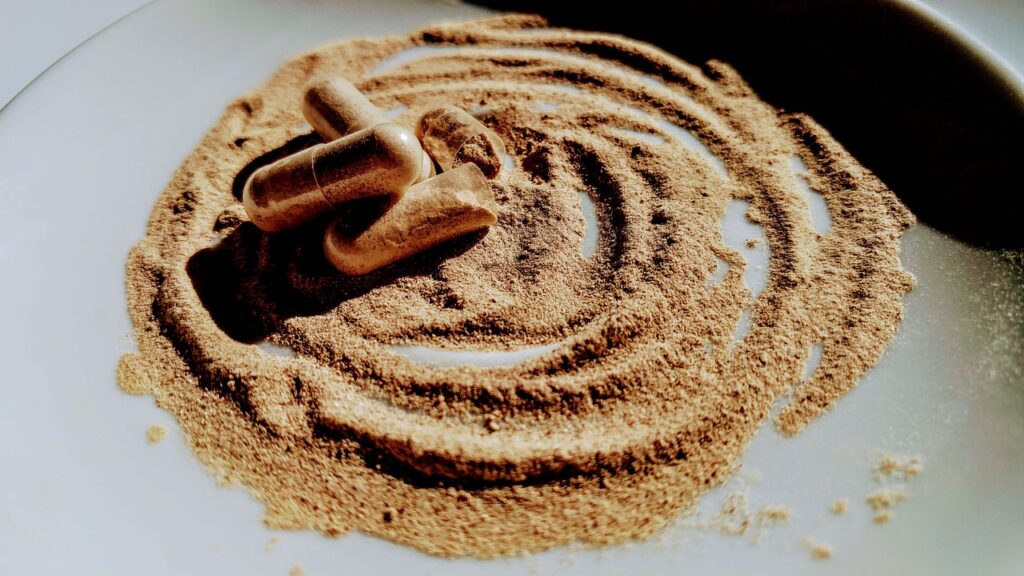
The most discussed materials in the research literature include Moringa oleifera seed proteins, cactus and other mucilage-rich plants, tannin-based coagulants, and powders or extracts made from agricultural residues such as fruit peels and seed wastes. A 2026 systematic review of plant-based coagulant research covering studies from 2000 to 2024 found that much of the published work still focuses on individual coagulants prepared by simple drying and grinding. A smaller share examines refined extracts, modified materials, or scale-up constraints.
This distinction matters in practice. A crude powder may be easy to prepare, but it can release proteins, oils, carbohydrates, color, and other organic substances into treated water. A purified or chemically modified extract may perform more consistently, but it can also require equipment, reagents, energy, and quality control that change the cost and sustainability profile.
How they work in coagulation and flocculation
Most colloidal particles in natural waters and many wastewaters carry a negative surface charge. Conventional metal salts such as alum or ferric chloride work partly by charge neutralization and partly by sweep floc formation as metal hydroxide precipitates develop. Plant based natural coagulants can work through several mechanisms, depending on the active compound.
Charge neutralization
Moringa oleifera is the classic example. Earlier water treatment studies identified cationic proteins in moringa seeds as important active agents. These positively charged proteins can adsorb onto negatively charged colloids and reduce repulsive forces, allowing particles to collide and aggregate. This helps explain why moringa is often effective in turbid clay waters, although the optimum dose still depends on source water conditions.
Polymer bridging
Mucilage-rich plants such as Opuntia cactus, aloe, okra, and related materials contain polysaccharides that can attach to multiple particles and form bridges between them. This bridging mechanism can create visible flocs, especially where divalent cations and suitable mixing conditions are present. However, overdosing a bridging polymer can restabilize particles or produce weak, slow-settling flocs.
Modified natural polyelectrolytes
Tannin-based coagulants occupy a different position. Tannins are plant polyphenols that can be chemically modified to produce cationic polyelectrolytes. In practical terms, some tannin products are closer to bio-based engineered chemicals than to raw plant powders. They may offer more consistent performance than unprocessed biomass, but they still require product-specific testing and compliance checks.
Main plant sources and likely applications
| Plant source | Typical active fraction | Commonly studied role | Practical caution |
|---|---|---|---|
| Moringa oleifera seeds | Cationic proteins and peptides | Turbidity reduction, coagulant aid, decentralized clarification | Crude extracts can leave residual dissolved organic carbon and nutrients |
| Opuntia cactus and other mucilage plants | Polysaccharide mucilage | Floc strengthening and bridging in turbid water or wastewater | Performance is sensitive to pH, ions, extraction method, and dose |
| Tannin-rich bark, wood, shells, or plant residues | Polyphenols, often modified into cationic polymers | Industrial wastewater, color removal, coagulant replacement or aid | Modification chemistry and product certification affect suitability |
| Fruit peels, seed wastes, leaves, and agro-residues | Proteins, polysaccharides, phenolics, fibers | Lab-scale wastewater and turbidity studies | Feedstock variability and shelf stability can limit direct scale-up |
The most credible applications are not always the most dramatic. Plant coagulants may be useful for high-turbidity surface water pretreatment, small-scale or emergency clarification followed by disinfection, wastewater solids removal, partial replacement of inorganic coagulants, or coagulant-aid strategies that reduce metal salt dosage. Claims are less convincing when untreated plant powders are presented as a replacement for a complete drinking water treatment system.
How they compare with alum, ferric salts, and synthetic polymers
Conventional coagulants remain dominant because they are available at industrial scale, have predictable specifications, are easy to dose, and fit established operating procedures. Alum, polyaluminum chloride, ferric chloride, ferric sulfate, and synthetic polymers also have known limitations, including chemical consumption, sludge handling, pH and alkalinity effects, and residual concerns if dosing is poorly controlled.
Plant-derived materials offer a different set of trade-offs. They may be renewable, locally available, biodegradable, and compatible with lower-resource settings. Some studies report lower sludge volumes or more biodegradable sludge when natural coagulants are used. These benefits are not guaranteed. If a plant coagulant requires solvent extraction, drying, grinding, cold storage, long-distance transport, or chemical modification, the total environmental advantage becomes site-specific.
| Evaluation point | Conventional coagulants | Plant based natural coagulants |
|---|---|---|
| Performance consistency | Generally high when product grade is controlled | Variable unless feedstock and extraction are standardized |
| pH impact | Metal salts can consume alkalinity and lower pH | Some plant extracts have less pH impact, but this is not universal |
| Sludge profile | Often mineral-rich and may be larger in volume | May be more organic and biodegradable, but disposal testing is still needed |
| Residual risk | Metal residuals, polymer residuals, or by-products if overdosed | Dissolved organics, microbial regrowth potential, taste, color, or odor concerns |
| Regulatory pathway | Well established for approved drinking water chemicals | Requires evidence, certification, and local acceptance for potable use |
Key limitations that should not be ignored
The strongest argument for plant coagulants is sustainability. The strongest argument against careless use is water quality risk. Peer-reviewed studies on moringa and other plant extracts repeatedly show that crude preparations can leave residual organic matter in treated water. In wastewater applications, this may be manageable or acceptable if the next process removes the organic load. In drinking water, residual dissolved organic carbon can support microbial growth, affect taste or odor, or increase the burden on filtration and disinfection.
Reproducibility is another limitation. The same plant species can differ by geography, season, maturity, storage time, drying method, oil content, and extraction procedure. A powder prepared from fresh local seeds may not behave like a purified extract used in a published jar test. For this reason, headline removal percentages from laboratory studies should be treated as starting points, not design guarantees. See also: Inhibitors.
Regulatory status is also separate from technical performance. In the United States and many other markets, treatment chemicals used for public drinking water normally need to meet recognized health-effect requirements such as NSF/ANSI/CAN 60 or an equivalent local approval route. A plant material that works in a beaker is not automatically acceptable for a municipal dosing system.
A practical evaluation framework
Before replacing or supplementing an existing coagulant, operators and project teams should evaluate plant based natural coagulants with the same discipline used for any treatment chemical.
- Characterize the water. Measure turbidity, pH, alkalinity, temperature, color, conductivity, dissolved organic carbon or COD, target contaminants, and seasonal variation.
- Run dose-response jar tests. Test a realistic dose range, mixing intensity, flocculation time, settling time, and pH conditions. Include the incumbent coagulant as a control.
- Assess treated water beyond turbidity. Check residual organics, color, odor, microbial indicators where relevant, sludge settleability, and filtration behavior.
- Test hybrid strategies. In many cases, the most practical option is not full replacement but partial substitution or use as a coagulant aid.
- Review downstream impacts. Confirm whether the plant coagulant affects filters, membranes, activated carbon, biological processes, disinfection demand, or disinfection by-product formation.
- Verify quality and compliance. For drinking water, confirm certification, impurity limits, allowable dose, labeling, storage stability, and local regulatory acceptance.
- Calculate real cost and sustainability. Include harvesting, transport, drying, milling, extraction, waste handling, shelf life, labor, and land-use implications, not only raw biomass price.
This framework helps separate promising materials from attractive but incomplete claims. A plant coagulant that slightly underperforms alum in turbidity removal may still be useful if it reduces sludge handling or improves local resilience. Conversely, a material that looks excellent in one jar test may be unsuitable if it adds too much organic load or lacks a reliable supply chain.
Where the technology is heading
Research is moving from simple proof-of-concept toward optimization, modification, and integration. Recent reviews emphasize extraction improvements, purified active fractions, hybrid natural-conventional dosing, multifunctional natural coagulants, and stronger characterization of sludge and residuals. This is a necessary shift. The future of plant coagulants will depend less on showing that a seed or peel can clarify turbid water and more on showing when, why, and under what controls it can do so reliably.
For industrial wastewater, the most likely near-term opportunities are site-specific: textile color removal, food and dairy wastewater pretreatment, landfill leachate conditioning, aquaculture water clarification, and polishing steps where organic residuals can be managed downstream. For municipal drinking water, the pathway is narrower because safety, certification, and consistency requirements are higher. That does not rule out plant-derived products. It means they must be treated as engineered water treatment chemicals, not informal additives.
Frequently asked questions
Are plant based natural coagulants the same as natural flocculants?
Not always. Some plant materials primarily neutralize particle charge, which is a coagulation function. Others mainly create particle bridges and strengthen flocs, which is closer to flocculation. Many natural materials do both to some degree, so their actual role should be determined by jar testing and particle behavior.
Can plant coagulants replace alum or ferric salts?
They can sometimes replace part of the dose or work as coagulant aids, but full replacement depends on the water matrix, treatment goal, product quality, and regulatory setting. Direct substitution without pilot testing is not advisable.
Which plant coagulant is most studied?
Moringa oleifera seed is among the most widely studied plant coagulants, especially for turbidity reduction. Cactus mucilage and tannin-based coagulants are also well represented in the literature, but each material works through different chemistry.
Are plant coagulants automatically safe for drinking water?
No. Natural origin does not remove the need for safety testing. Drinking water applications require attention to residual organics, microbial regrowth, taste, odor, disinfection, impurity limits, and certification or regulatory acceptance.
What is the most important design lesson?
Do not evaluate plant coagulants by turbidity removal alone. A publishable jar-test result is useful, but practical adoption requires broader evidence on residuals, sludge, filtration, disinfection, supply chain stability, and whole-system cost.