Powder activated carbon water treatment for taste, odor and seasonal contaminant control
Key Takeaways
- Understand the main symptoms and warning signs.
- Review common risks and prevention options.
- Learn when to seek professional medical advice.
What powder activated carbon water treatment does
Powder activated carbon water treatment usually means adding powdered activated carbon, or PAC, as a short-contact adsorbent within a treatment train. PAC is introduced as a fine carbon powder, mixed into the water, given time to contact dissolved contaminants, and then removed with flocculated solids through clarification, filtration, or both. Its main advantage is flexibility: a plant can raise or lower the dose during taste and odor events, algal bloom periods, or other short-term spikes in organic contaminants.
PAC is not a universal treatment. Performance depends on the target compound, carbon source, pore structure, contact time, competing natural organic matter, dose, mixing, and the ability of downstream processes to remove the spent carbon. If any of these conditions is weak, a PAC program can look effective in a jar test but underperform at full scale.
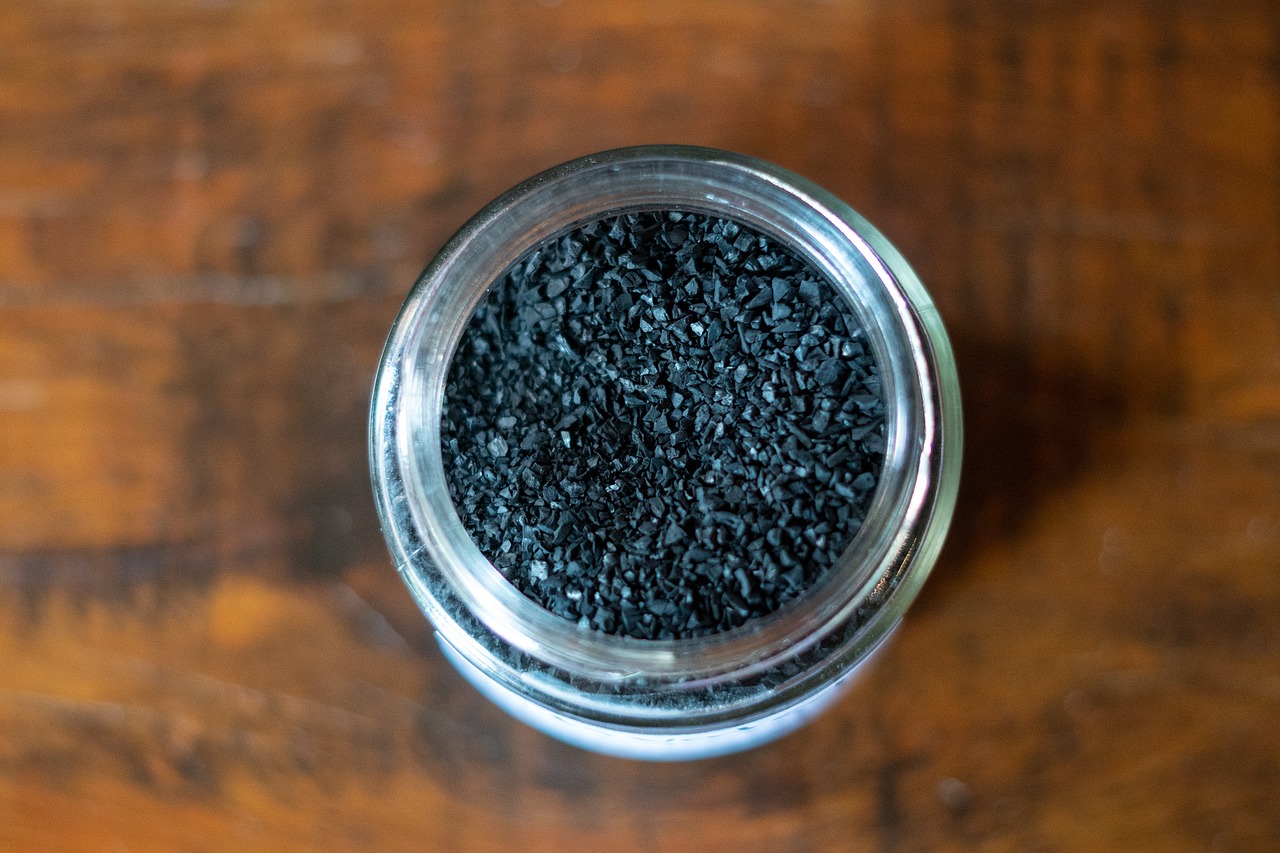
PAC is most often discussed in municipal drinking water because it can be added to conventional coagulation, flocculation, sedimentation and filtration systems without building a permanent adsorption bed. It is also used in selected industrial and wastewater applications where powdered adsorbent can be captured in sludge or separated by membranes. For teams comparing adsorption with chemical clarification, the distinction is important: PAC does not work like a coagulant. It adsorbs dissolved organic molecules onto porous carbon surfaces, while coagulants and flocculants help gather particles and spent carbon into removable flocs.
Why PAC is used alongside coagulation and flocculation
Conventional clarification is effective at removing suspended solids, turbidity and many particle-associated contaminants. It is less effective when the problem is a dissolved, low-concentration organic compound that causes odor, color, toxicity concern, or higher downstream disinfectant demand. PAC can help fill that gap because its internal pore structure adsorbs a range of organic compounds before the carbon is physically removed.
The practical reason PAC is widely used is operational flexibility. A utility may not need year-round adsorption capacity for earthy-musty taste compounds such as geosmin and 2-MIB, but it may need a rapid response during warm-season reservoir turnover or cyanobacterial bloom conditions. In those cases, PAC can be fed for days or weeks and then reduced when source water improves. This makes it different from granular activated carbon, which is installed as a continuous fixed-bed process and managed through breakthrough monitoring, replacement or reactivation cycles.
That flexibility creates a design challenge. PAC must receive enough contact time before it is removed. If the feed point is too close to sedimentation or filtration, the carbon may leave the process before adsorption reaches a useful level. If PAC is added too early in a source water with high organic loading, natural organic matter may occupy adsorption sites before the target compound is removed. The best feed location is therefore site-specific and should be confirmed by bench or pilot testing rather than copied from another plant.
Contaminants PAC can help control and where it is limited
Public guidance from the U.S. Environmental Protection Agency describes activated carbon as useful for organic adsorption, while emphasizing that effectiveness varies with carbon type, pore size and source-water chemistry. The same caution applies to PAC in full-scale operation. The word carbon does not guarantee removal of every contaminant, and a dose that works for one target may perform poorly for another.
| Water quality issue | Where PAC can be useful | Key limitation |
|---|---|---|
| Taste and odor | Seasonal control of dissolved odor compounds, especially when events are intermittent and a permanent GAC bed is not justified. | Carbon selection matters. A dose that works for one odor compound or source water may not work after algae, temperature or organic matter changes. |
| Cyanotoxins | EPA cyanotoxin guidance notes that PAC can help with some extracellular cyanotoxins, especially microcystins, when matched with appropriate carbon and sufficient dose. | EPA guidance also notes that doses above 20 mg/L may be needed for complete toxin removal in some cases, particularly when natural organic matter is high. |
| Natural organic matter and DBP precursors | PAC may reduce some dissolved organic carbon fractions that contribute to color, oxidant demand or disinfection byproduct formation. | It is selective and may not remove enough bulk organic matter to replace optimized coagulation or other organic-control strategies. |
| PFAS | PAC can provide modest removal for some PFAS under certain conditions and may be evaluated as a supplemental tool. | EPA PFAS treatment information states that PAC is generally less efficient and economical than GAC for PFAS, and spent PAC creates sludge management questions. |
| Industrial trace organics | PAC may polish certain soluble organic contaminants before clarification, flotation, filtration or membrane separation. | Bench testing is essential because competing organics, surfactants, oils and high suspended solids can reduce adsorption capacity. |
For operators, the useful distinction is not simply that PAC adsorbs organics. The key question is whether the risk is episodic or continuous. PAC is attractive when a contaminant appears in peaks, when contact basins and clarification already exist, and when the plant can manage the additional solids. Continuous contamination, frequent breakthrough concerns, or strict finished-water targets may favor GAC, ion exchange, membranes, advanced oxidation, or a combined process.
Operating variables that decide PAC performance
Carbon source and pore structure
PAC can be made from coal, lignite, wood, coconut shell and other high-carbon materials. These raw materials and activation methods create different pore-size distributions. Smaller molecules may adsorb well in micropores, while larger molecules, including some algal toxins, may require more mesopore volume. EPA cyanotoxin materials note that wood-based activated carbons have generally been effective for microcystin adsorption, while carbon performance for other cyanotoxins has a smaller evidence base and should be verified for the specific water.
Dose and contact time
PAC dose is commonly expressed in mg/L, but dose alone is not meaningful without contact time and water quality. A high dose with poor mixing or very short residence time can underperform a lower dose with better contact. For episodic taste and odor control, operators often run jar tests with several PAC products and doses, then track finished-water odor compounds, turbidity and filter performance. For health-related contaminants, bench testing should be more conservative and should use representative raw-water conditions from the season of concern.
Natural organic matter competition
Natural organic matter is one of the main reasons PAC results vary from site to site. Humic substances, algal organic matter and other background organics can compete for adsorption sites and increase the PAC dose required for the target compound. This is why results from distilled water or simple laboratory matrices can overstate full-scale performance. Source-water total organic carbon, UV254, temperature, pH and seasonal algae indicators provide useful context when interpreting PAC tests.
Mixing, wetting and feed point control
Dry PAC must be wetted and dispersed well enough to expose its surface area. Poor wetting can form clumps that settle or pass through the process with less useful adsorption. Feed equipment, slurry concentration, carrier water, eductor performance and rapid-mix energy all influence performance. In a conventional plant, PAC is often evaluated at the raw-water intake, in the raw-water line, at rapid mix, or ahead of coagulation. The right choice balances adsorption time against the risk that the carbon will be consumed by non-target organics before it reaches the main removal zone.
How PAC compares with GAC and other treatment options
PAC and GAC are made from similar activated carbon materials, but they behave differently in a plant. PAC is dosed into flowing water and removed with solids. GAC is held in a fixed bed, and water passes through it. This physical difference changes economics, monitoring and waste management.
| Option | Typical role | Strength | Limitation |
|---|---|---|---|
| PAC | Temporary or adjustable adsorption within an existing clarification or filtration train. | Fast to deploy, dose can change with water quality, useful for seasonal events. | Single-use in many plants, adds sludge mass, requires reliable downstream solids removal. |
| GAC | Continuous adsorption in filter beds or contactors. | Strong for many organic contaminants and often more practical for long-term adsorption. | Requires capital equipment, monitoring for breakthrough, media replacement or reactivation. |
| Ion exchange | Selective removal of charged contaminants such as nitrate, perchlorate and many PFAS. | Can be highly effective when resin chemistry matches the target. | Brine, regenerant or spent resin management must be planned. |
| Membranes | Physical separation by nanofiltration or reverse osmosis. | Broad removal for many dissolved contaminants. | Higher energy use, concentrate disposal and pretreatment needs can be significant. |
| Advanced oxidation | Chemical transformation of some micropollutants. | Can treat compounds that are poorly adsorbed. | May require post-treatment and careful byproduct evaluation. |
For PFAS, this comparison is especially important. EPA treatment summaries identify activated carbon adsorption, ion exchange and high-pressure membranes as effective technologies, but they also distinguish PAC from GAC. PAC cannot operate as a flow-through bed because of its small particle size, so it is added and removed with solids. That makes it less efficient for sustained PFAS control in many drinking-water settings. The practical conclusion is not that PAC has no PFAS value; it is that PAC should not be assumed to replace dedicated PFAS treatment without site-specific data and a residuals plan. See also: Inhibitors.
Testing and specification checklist before using PAC
A defensible PAC program starts with a clear treatment objective. Is the plant trying to reduce geosmin, MIB, microcystin, color, UV254, a specific industrial organic, or a group of emerging contaminants? Each objective affects the test method, analytical reporting limit and acceptable residual risk.
- Define the target compound and performance metric. Avoid general claims such as improved water quality without naming the contaminant or parameter being measured.
- Test multiple PAC products. Compare carbons from different sources or activation profiles because pore structure can matter more than a generic iodine number for some targets.
- Use representative raw water. Include high-organic, warm-weather or bloom-period samples if those are the conditions driving PAC use.
- Run a dose-response series. Test several doses and contact times rather than relying on a single jar result. This helps identify diminishing returns.
- Simulate the real treatment sequence. Add coagulant, polymer and PAC in roughly the same order and at the same mixing intensity used at the plant.
- Measure downstream effects. Track turbidity, filter headloss, settled solids, sludge volume and any residual carbon carryover.
- Check product standards and certifications. For potable water applications, purchasers commonly review applicable requirements such as AWWA B600-24 for powdered activated carbon and NSF/ANSI/CAN 61 where contact-material health effects certification is required by the project or jurisdiction.
- Review handling safety. Treat PAC dust carefully, follow the supplier safety data sheet, provide dust control, and design storage and wetting systems to reduce worker exposure and housekeeping problems.
These steps also help prevent overbuying. A product with excellent adsorption in one plant may not justify its cost in another if natural organic matter consumes capacity or if existing clarification cannot reliably remove the added solids. Conversely, a modest PAC dose may deliver strong value during a short taste and odor episode if it prevents finished-water complaints without permanent capital investment.
Residuals and sludge management should not be an afterthought
Spent PAC leaves the water treatment process carrying whatever it adsorbed, along with background organics and captured solids. In a conventional plant, that usually means more sludge from sedimentation basins, clarifiers, dissolved air flotation units or filters. The increase may be manageable during short events but can become a constraint during long algal bloom seasons or high-dose contaminant response.
Residuals planning should consider sludge thickening, dewatering, disposal classification, landfill acceptance, return-water impacts and any contaminant-specific restrictions. PFAS is the clearest example: if PAC is used to adsorb PFAS, the spent carbon-containing sludge becomes part of the PFAS management problem. Similar caution applies to industrial applications where adsorbed organics may change residual handling requirements. A PAC treatment decision should therefore include both finished-water performance and a clear path for spent solids.
Practical conclusion for water treatment teams
PAC is best understood as a flexible adsorption tool that works with, not instead of, clarification and filtration. It can be highly useful for seasonal taste and odor control, selected cyanotoxin response, and some organic polishing duties. Its limitations are just as important: it is sensitive to water chemistry, consumes sludge capacity, and is not the leading long-term solution for every emerging contaminant.
The strongest applications share three characteristics. First, the target contaminant is adsorbable by the selected carbon. Second, the plant can provide enough contact time before PAC is removed. Third, downstream flocculation, clarification and filtration can capture the spent carbon without compromising turbidity or residuals management. When those conditions are confirmed through testing, powder activated carbon water treatment can be a practical and scalable addition to a broader treatment strategy.
Frequently asked questions
Is powder activated carbon the same as powdered activated carbon?
In water treatment writing, powdered activated carbon is the standard technical term, and PAC is the common abbreviation. Search phrases such as powder activated carbon water treatment usually refer to the same material and application.
Is PAC a flocculant?
No. PAC is an adsorbent. It captures dissolved organic compounds on porous carbon surfaces. Flocculants and coagulants help form larger particles so suspended matter and spent PAC can be removed by sedimentation, flotation or filtration.
Can PAC remove PFAS from water?
PAC may remove some PFAS to a limited degree under certain conditions, but public EPA treatment information indicates that GAC, ion exchange and high-pressure membranes are generally more suitable for sustained PFAS removal. Any PAC use for PFAS should be backed by site-specific testing and residuals planning.
Where should PAC be added in a treatment plant?
The feed point should provide enough contact time and adequate mixing before removal. Common evaluation points include the intake, raw-water line or rapid mix, but the best location depends on the treatment sequence, competing organics and solids removal capacity.
Is PAC reusable after treatment?
In most conventional water treatment systems, PAC is used once and leaves with sludge. GAC is more commonly regenerated or replaced as a fixed-bed media. This difference is one reason PAC is often favored for intermittent events rather than continuous adsorption duty.