
How small molecule inhibitors shape drug discovery from target selection to DDI risk

Key Takeaways
- Understand the main symptoms and warning signs.
- Review common risks and prevention options.
- Learn when to seek professional medical advice.
What small molecule inhibitors are and why they matter
Small molecule inhibitors are low-molecular-weight compounds designed to reduce the activity of a biological target, such as an enzyme, receptor, transporter, signaling protein or protein complex. They remain important in drug discovery because many disease drivers are located inside cells, where antibodies and other large biologics have limited access. A well-designed inhibitor may bind an active site, an allosteric pocket or a regulatory interface, changing the behavior of a pathway in a measurable way.
This is why small molecule inhibitors are widely used in oncology, inflammation, infectious disease, metabolic disorders and neuroscience. Their value, however, is not defined by potency alone. Selectivity, residence time, cellular exposure, metabolic stability, drug-drug interaction risk and patient-selection logic often decide whether an inhibitor can move from a promising chemical series to a credible development candidate.
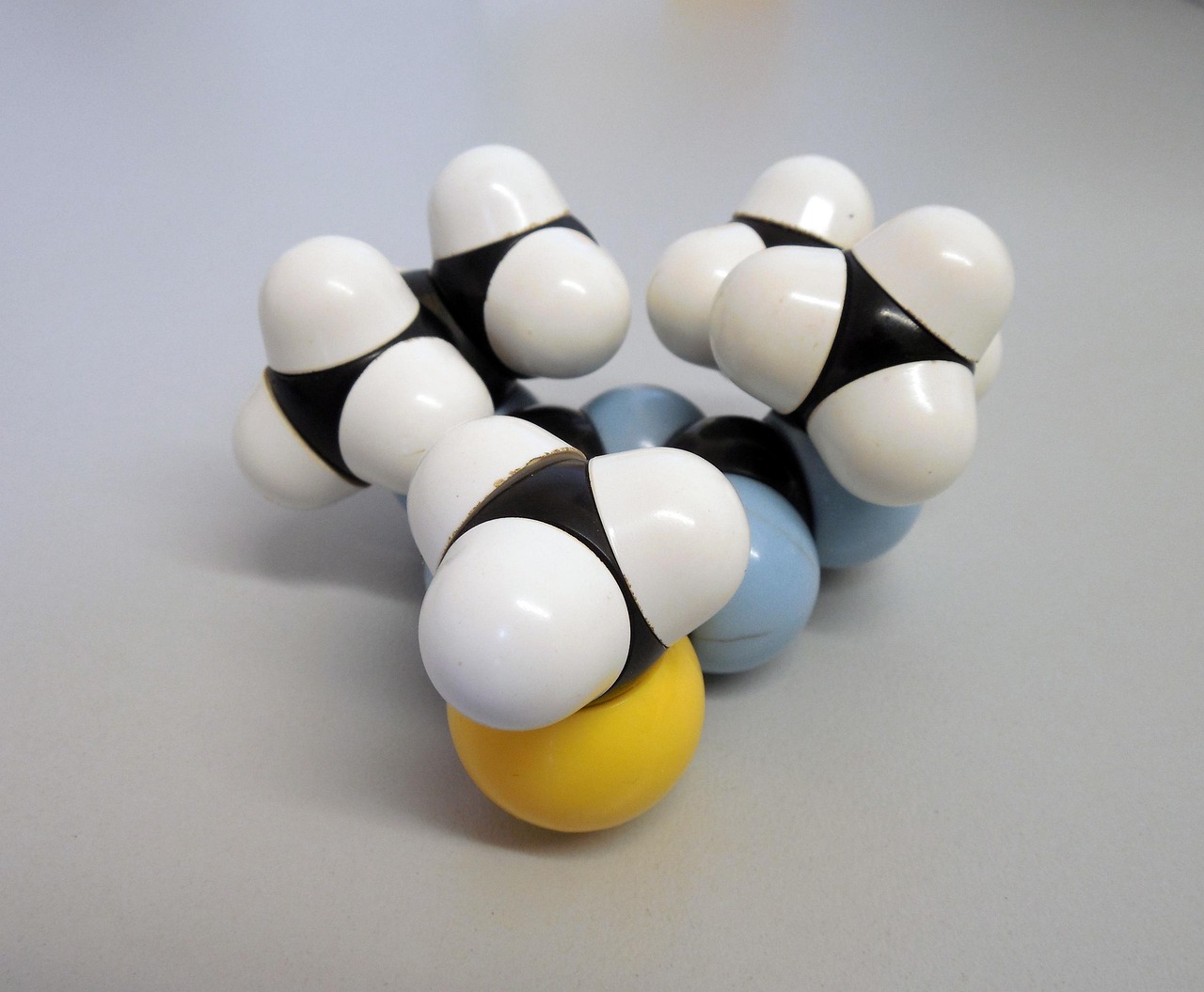
For readers following the broader Inhibitors field, the practical point is straightforward: stronger inhibitor programs connect chemistry, biology and translational evidence early, rather than treating them as separate stages.
How inhibitors work at the molecular level
The term “inhibitor” covers several mechanisms. The most familiar is competitive inhibition, where a compound occupies the same binding site used by a natural substrate or ligand. Many kinase inhibitors, protease inhibitors and enzyme inhibitors follow this logic. Competitive binding is often measurable in biochemical assays, but cellular activity can differ if the compound does not reach the relevant compartment or if substrate concentrations are much higher in cells than in a purified assay.
Allosteric inhibitors act at a separate regulatory site and alter the target’s conformation or signaling output. This can improve selectivity when the active site is conserved across a protein family. Many ATP-binding kinase pockets, for example, share structural features, so allosteric strategies can help distinguish one kinase or mutation state from another. Covalent inhibitors add another option by forming a bond with a nucleophilic amino acid, often cysteine. Their potential advantage is sustained target engagement, but they require careful assessment of off-target reactivity and safety margin.
Not every small molecule that reduces a disease pathway is a classical inhibitor. Some compounds stabilize inactive states, block protein-protein interactions, prevent complex assembly or induce target degradation. Targeted protein degradation approaches such as PROTACs and molecular glues are often discussed alongside inhibitors because they use small-molecule recognition. Their pharmacology is different, however: they remove or reduce the abundance of a protein rather than only blocking an active site. That distinction affects assay design, dose-response interpretation and safety analysis.
Major target classes for small molecule inhibitor discovery
Kinases
Kinases remain one of the most visible target families for small molecule inhibitor development. The clinical precedent created by early targeted cancer therapies helped establish kinase inhibition as a major area in medicinal chemistry. Reviews in the drug discovery literature have documented dozens of approved small molecule kinase inhibitors and many more investigational programs across cancer and non-cancer indications.
The opportunity is clear, but the technical challenge is also significant. ATP-binding sites are related across the kinome, and resistance mutations can reduce binding or activate bypass signaling. Modern kinase programs therefore tend to evaluate mutation coverage, pathway suppression, kinome selectivity and combination potential from an early stage.
Proteases and other catalytic enzymes
Protease and enzyme inhibitors are attractive because catalytic activity can often be measured directly. The design logic may involve substrate mimicry, transition-state mimicry, metal chelation or reversible covalent chemistry. Enzyme inhibition strategies are used in infectious disease programs, anticoagulant research and inflammatory pathway work. Main development risks include poor selectivity against related enzymes, reactive functional groups, narrow therapeutic windows and species differences in preclinical models.
Epigenetic and transcription-associated targets
Epigenetic targets such as histone deacetylases, methyltransferases and bromodomain proteins show how small molecules can influence gene-expression programs indirectly. These targets are chemically attractive because many have ligandable domains or catalytic pockets, but their biology is complex. A compound may change many downstream genes, not just one pathway. For that reason, cellular phenotyping, transcriptomic readouts and toxicity monitoring are often more informative than a single biochemical potency value.
Protein homeostasis and degradation-related targets
Proteasome inhibitors and targeted protein degradation technologies illustrate the expanding boundary between inhibition and controlled protein removal. Proteasome inhibition affects protein turnover broadly and can be therapeutically useful in selected cancers, but it requires careful management of systemic effects.
Degrader approaches are more target-directed in concept, yet they introduce additional variables, including ternary complex formation, E3 ligase expression, linker design and degradation kinetics. In practice, these programs need evidence that the observed cellular effect comes from target loss rather than nonspecific stress.
From hit to candidate, what evidence matters most
A hit compound is not a drug candidate. Early potency can be misleading if the assay is sensitive to aggregation, redox cycling, fluorescence interference or promiscuous binding. A stronger inhibitor package usually combines orthogonal assays, structure-activity relationships, cellular target engagement and early developability data. Medicinal chemistry teams often work on potency and selectivity while also managing solubility, permeability, metabolic stability and synthetic tractability.
| Development question | Useful evidence | Why it matters |
|---|---|---|
| Does the compound bind the intended target? | Biochemical assay, biophysical binding, structural biology or mutational validation | Reduces the risk of optimizing an assay artifact |
| Does target binding translate into cellular activity? | Cellular target engagement, pathway biomarkers and rescue experiments | Shows that exposure and mechanism are relevant in a biological system |
| Is selectivity sufficient? | Family panels, counter-screens and phenotypic toxicity assays | Helps separate on-target pharmacology from avoidable off-target liability |
| Can the compound reach useful exposure? | Solubility, permeability, plasma protein binding, clearance and oral bioavailability studies | Links medicinal chemistry properties to feasible dosing |
| Are DDI risks manageable? | CYP and transporter inhibition or induction assays, followed by modeling or clinical studies when needed | Prevents late surprises in combination therapy and labeling |
One practical rule is to avoid optimizing only one number. A compound with nanomolar biochemical potency may still fail if it is insoluble, unstable in microsomes, unable to enter cells or strongly inhibits a major metabolic enzyme. Conversely, a slightly less potent molecule with clean selectivity and better exposure can be more valuable if it produces durable pathway modulation at achievable concentrations.
ADME and drug-drug interaction risk can change the program value
Absorption, distribution, metabolism and excretion are not late-stage housekeeping tasks for inhibitor programs. They can define the clinical use case. Many small molecule inhibitors are intended for chronic dosing or combination therapy, particularly in oncology and inflammatory disease. If a compound strongly inhibits or induces cytochrome P450 enzymes or transporters, it may alter exposure of co-administered medicines. That can lead to dose adjustments, contraindications or additional clinical studies.
FDA guidance on in vitro metabolism- and transporter-mediated drug interaction studies emphasizes the use of robust systems, selective probe substrates and characterization of reversible or time-dependent inhibition. The agency’s drug interaction resources also caution that many chemical inhibitors are not specific for a single CYP enzyme, so selectivity and potency should be verified under the same experimental conditions used in the study. See also: Flocculants.
For development teams, CYP and transporter data should not be treated as checklist results. They should be interpreted alongside projected human exposure, unbound concentration, route of administration and expected patient co-medications.
Transporter effects also matter. Inhibitors of P-glycoprotein, BCRP, OATP, OCT or MATE transporters can change tissue distribution or clearance of other drugs. The risk is context dependent: a local gastrointestinal interaction may matter for oral drugs, while hepatic or renal transporter inhibition may affect systemic exposure. Early screening cannot answer every clinical question, but it can identify combinations most likely to need modeling, label language or dedicated study.
Recent regulatory and market signals for inhibitor-focused discovery
Recent FDA CDER annual approval reports show that novel drug output has remained active: CDER reported 55 novel drug approvals in 2023, 50 in 2024 and 46 in 2025, including both new molecular entities and therapeutic biologics. These totals should not be read as a count of inhibitor approvals, but they do show that small-molecule and targeted-therapy development continues within a busy regulatory environment. The 2025 CDER report also separated the 46 novel approvals into 34 new molecular entities and 12 biologics, a useful reminder that chemical drugs still represent a major share of new therapeutic innovation.
For inhibitor developers, the regulatory direction is less about favoring one modality and more about evidence quality. Programs with a biomarker-defined population need analytically reliable testing and a convincing link between the marker, the target and clinical response. Programs using accelerated or priority pathways still need a defensible benefit-risk argument. Programs intended for combination regimens need stronger attention to overlapping toxicity and drug interaction risk.
The commercial signal is similar. A target can be scientifically exciting but commercially difficult if the patient population is small, the resistance landscape is complex or competing modalities already address the same pathway. Small molecule inhibitors often retain advantages in oral delivery, manufacturing scalability and intracellular reach, but these advantages do not remove the need for differentiated efficacy, tolerability and positioning.
Practical implications for chemical and life science teams
The most competitive inhibitor programs are built around testable decisions. Before a project advances, teams should be able to explain why inhibition of the selected target is expected to change disease biology, which patient group is most likely to benefit, what level of target engagement is needed and which safety risks are plausible from the target’s normal function. This is especially important for targets with broad physiological roles, where incomplete selectivity or excessive pathway suppression can create toxicity.
- Define the mechanism early. Distinguish active-site inhibition, allosteric inhibition, covalent binding, pathway modulation and degradation-linked effects.
- Use orthogonal assays. Confirm activity with methods that do not share the same interference risks.
- Track selectivity as a program metric. Selectivity should improve with potency, not be postponed until candidate nomination.
- Connect chemistry to exposure. Potency must be interpreted with solubility, permeability, plasma protein binding and metabolic stability.
- Plan for combinations. Many inhibitors will be used with other medicines, so DDI and overlapping toxicity risks should be assessed early.
- Separate facts from hypotheses. A pathway model is useful, but it becomes decision-grade only when supported by target engagement and biological response data.
For industry observers, this is why inhibitor news should be read carefully. A discovery-stage announcement may report a potent lead compound, while a development-stage update may focus on exposure, safety, biomarkers or regulatory milestones. Both are relevant, but they answer different questions. The enduring strength of small molecule inhibitors is not that they are simple; it is that their chemistry can be optimized, measured and connected to mechanism in a disciplined way.
Frequently asked questions
Are small molecule inhibitors the same as small molecule drugs?
No. Small molecule drugs include inhibitors, agonists, antagonists, modulators, stabilizers and degraders. An inhibitor is specifically a compound that reduces the activity or function of a target or pathway.
Why are small molecule inhibitors common in cancer research?
Many cancers are driven by altered signaling pathways, oncogenic kinases, epigenetic changes or defective apoptosis controls. Small molecules can often reach intracellular targets involved in these processes, making them useful for precision oncology when the target biology and patient-selection strategy are strong.
What is the difference between potency and selectivity?
Potency describes how much compound is needed to inhibit a target under defined conditions. Selectivity describes how well the compound avoids other targets. A potent but poorly selective inhibitor may create toxicity or misleading biological results.
Why do CYP and transporter studies matter for inhibitors?
Many inhibitors are co-administered with other drugs. If an inhibitor affects CYP enzymes or transporters, it may change the exposure of those drugs or have its own exposure changed. That can affect dose selection, clinical study design and labeling.
Do targeted protein degraders replace small molecule inhibitors?
Not broadly. Degraders add another strategy for targets where removing the protein may be more useful than blocking an active site. Classical inhibitors remain highly relevant when reversible pathway control, oral exposure, selectivity and safety can be achieved.